

I have fine, color-treated hair that breaks easily and sheds more than I'd like to admit. My partner Theo has thick 4C natural hair that goes through moisture the way a sponge goes through water. We have almost nothing in common when it comes to hair texture, density, or routine. So when we both started using Mielle Organics Rosemary & Mint Scalp & Hair Strengthening Oil in January, I was genuinely curious whether one product could actually serve both of us. Four months later, I have a real answer.
Before I get into the results, one thing worth saying: I tested this with consistent, documented use. Twice a week scalp application for both of us, same bottle, tracked wash-day shedding counts by hand. This is not a one-week impression or a viral TikTok follow-up. Four months of notes is what I have, and that is what I am sharing.
The Quick Verdict
Mielle Rosemary Oil delivers real, measurable scalp results for two different hair types when used consistently over months, not just days.
Amazon Check Today's Price →Your scalp has been waiting four months for you to try this.
Mielle Organics Rosemary & Mint Scalp & Hair Strengthening Oil with Biotin is consistently in stock on Amazon. One bottle goes a long way for both partners if you share.
Amazon Check Today's Price on Amazon →How We Tested It
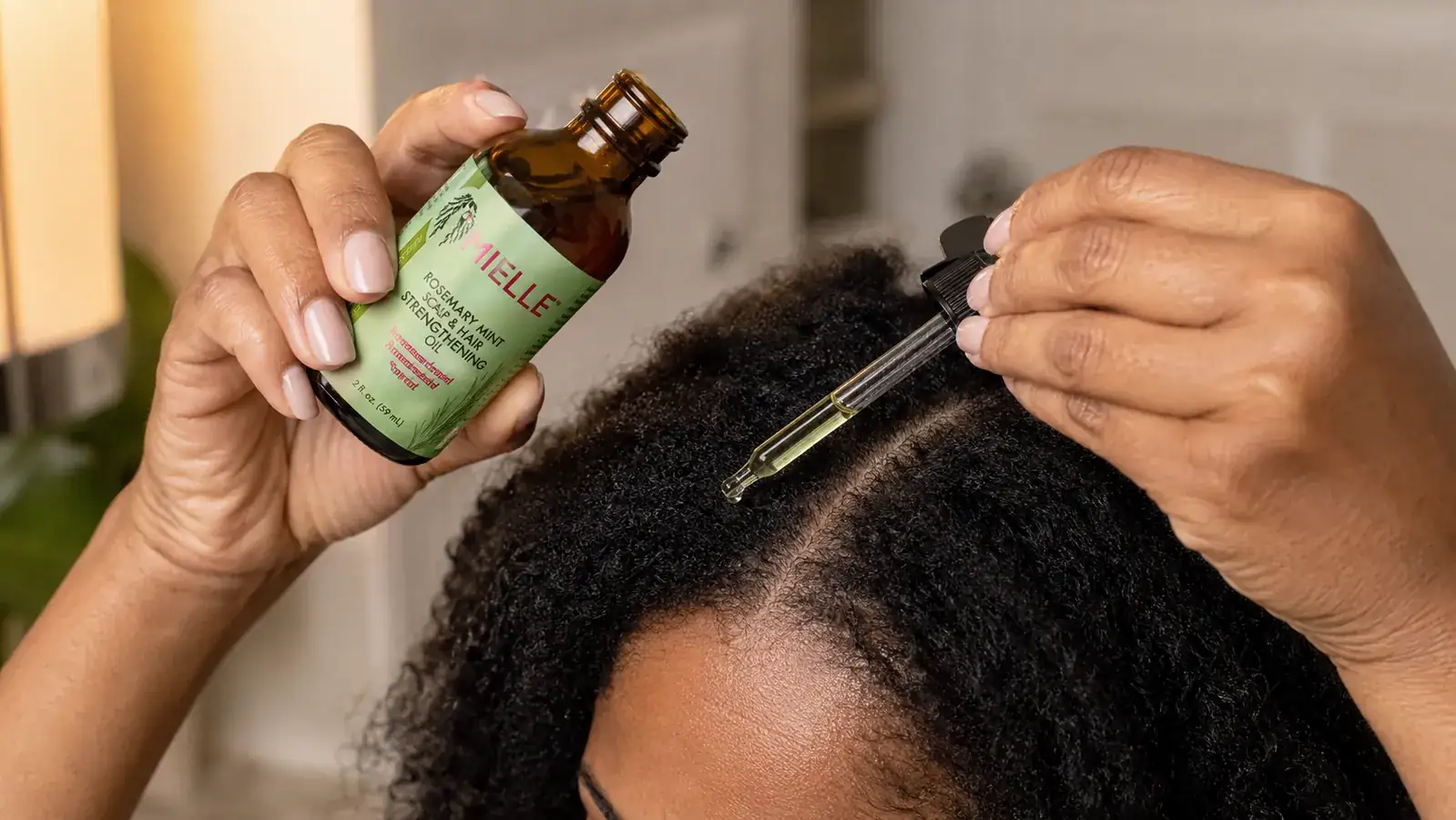
Theo and I both have different wash schedules, so I standardized the application method instead of the schedule. We each applied a dropper's worth (roughly 8 to 10 drops) directly to the scalp along the hairline and parting areas, followed by a 3-minute fingertip massage. Neither of us diluted it or mixed it with a carrier oil. We used it as-is, straight from the bottle, twice a week regardless of wash day.
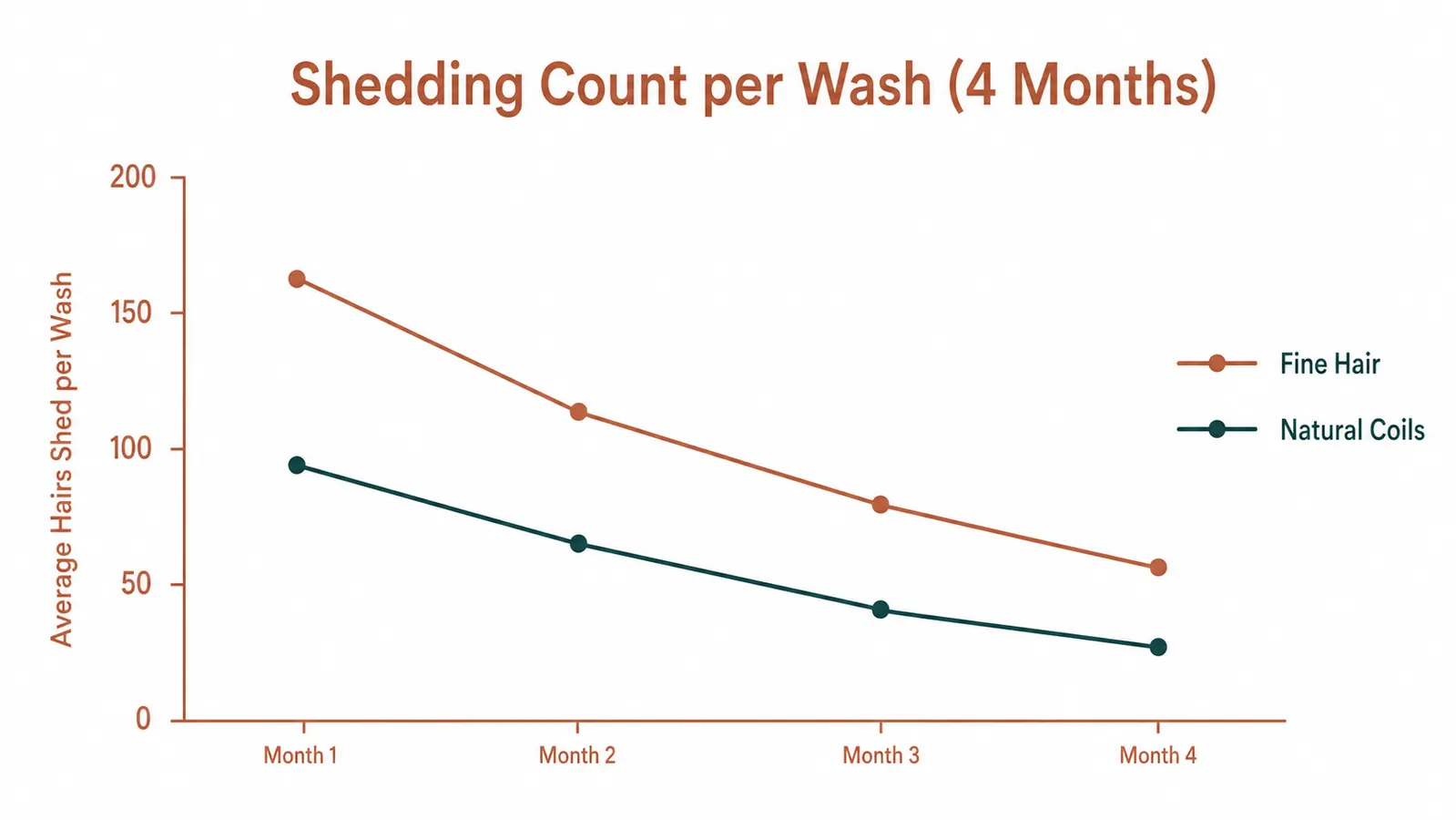
For me: fine, shoulder-length hair, color-treated with bleach highlights, historically high shedding during wash days. I counted shed hairs each wash day by collecting them from the shower drain and estimating. Not glamorous, but it tells you something. Starting count: roughly 120 to 150 hairs per wash. For Theo: dense, low-porosity 4C hair, washes every 10 to 14 days, had noticed some thinning at the temples over the past year from tension styles. He tracked the same way I did.
I did not change my shampoo, conditioner, or any other part of my routine during those four months. Theo did the same. One variable changed: Mielle Rosemary Oil, applied consistently.
What Is Actually in This Oil
The full name is Mielle Organics Rosemary & Mint Scalp & Hair Strengthening Oil with Biotin. The active drivers are rosemary oil (shown in peer-reviewed research to be comparable to 2% minoxidil for androgenic hair loss over 6 months), peppermint oil (which increases scalp circulation on application, the tingle you feel is real), and biotin (a B-vitamin involved in keratin production, though biotin in a topical oil absorbs differently than a supplement). There is also babassu oil, which is light enough to penetrate fine hair without weighing it down, and a handful of other botanical extracts.
What I appreciate about this formula is what is not in it: no sulfates, no parabens, no mineral oil, and no heavy petrolatum sitting on top of the scalp. The ingredient deck is clean without being sparse. The mint scent is strong at application and fades within 20 minutes. If your partner is sensitive to fragrance, that is worth noting. For us, it was a non-issue.
Month-by-Month: What Changed
Month one felt like nothing. I will be honest about that. My shedding count did not budge. Theo noticed the scalp tingle and said his scalp felt less tight after sessions, but no visible difference. This is the part where most people quit. If you are expecting week-three results, you will be disappointed. Scalp and follicle health takes time to respond because hair grows in cycles. Month one is setup work.
Month two was when I started believing in it. My wash-day shedding dropped from 120 to 150 hairs to closer to 80 to 90. That is not a small margin. Theo noticed his temples looked less sparse in photographs, though he was still skeptical. His scalp flakiness, which he had never mentioned but I noticed on his dark shirts, had nearly disappeared by week six.
By month three, Theo stopped calling it 'that oil you bought' and started asking where we kept the bottle.
Month three was the clearest. My hair felt denser at the roots, specifically near the hairline where I typically see the most breakage after bleaching. Theo's temple area showed visible baby hairs that had not been there in the photos we took at the start. He shifted from skeptical to converted. He now applies it independently without me reminding him, which is the truest measure of whether something works.
Month four: we are still using it. My shedding is holding steady around 70 to 80 hairs per wash. Theo's temples look noticeably fuller in photographs compared to January. Neither of us is dealing with dramatic regrowth, but the trend lines are clearly positive. See the chart above for the visual comparison of how our shedding counts moved over time.
Texture, Absorption, and the Fine-Hair Problem
Fine-hair people are right to be nervous about oils. Most scalp oils leave a greasy residue that makes fine hair look flat and dirty within a day. Mielle Rosemary Oil is lighter than I expected given how opaque it looks in the bottle. Applied to dry or damp hair at the scalp only, it absorbs within a few hours. I have never woken up the day after an application feeling like I needed to wash immediately.
The key is application zone. I keep it strictly on the scalp and hairline, not on the mid-lengths or ends. For fine hair, running this through the lengths would be a mistake. Dropper application makes that precision easy. For Theo's thick natural hair, he applies it more liberally through the scalp and slightly into the roots without any issue. The formula scales up in quantity without getting heavy.
Where Mielle Rosemary Oil Falls Short
The dropper design is functional but not elegant. For thick natural hair applications with multiple parts, the dropper slows Theo down. He has started parting with a rat-tail comb and applying directly from the bottle tip, which works better. A wider applicator nozzle would serve denser hair types better. This is a minor complaint but worth mentioning if your hair is thick and you are planning high-frequency use.
The bottle is small. Each bottle is 2 ounces. Shared between two people using it twice weekly, we went through one bottle in about six weeks. Budget-wise that is still reasonable at current pricing, but if you are buying single bottles at a time, you may want to grab two at once so you do not run out mid-month and break the consistency streak. Consistency is the entire game with this product.
And I want to be clear about what this is not: it is not a medical treatment for alopecia or pattern hair loss. If you have significant clinical thinning, you need a dermatologist conversation alongside any topical oil. Mielle Rosemary Oil works best in the preventive and maintenance range. We saw real results in that category. I would not claim more than that.
What I Liked
- Clean formula: no sulfates, parabens, or heavy mineral oil
- Works on fine AND dense hair types without needing reformulation
- Visible shedding reduction starting in month two with consistent twice-weekly use
- Scalp flakiness noticeably reduced within the first four to six weeks
- Light enough for fine hair when applied to scalp only
- Biotin plus rosemary and peppermint combination is backed by published research
Where It Falls Short
- Dropper is slow for thick natural hair applications across multiple parts
- Bottle is only 2 oz; heavy users or couples sharing will reorder frequently
- Strong mint scent at application may not suit fragrance-sensitive scalps
- Results require two or more months of consistent use to become measurable
- Not a clinical treatment for advanced or patterned hair loss

How Mielle Compares to What We Used Before
Before committing to Mielle Rosemary Oil, I had been using a generic argan oil on my scalp. Theo had been using a DIY castor oil mix he made from a YouTube recipe. Neither of us had been doing any kind of structured scalp treatment, and neither approach had measurably moved our shedding numbers. The argan oil made my scalp feel moisturized but did nothing for density. Theo's castor oil mix was effective at sealing moisture but too heavy to penetrate low-porosity hair effectively, so most of it sat on top.
Mielle outperformed both of our previous approaches. I attribute that to the rosemary and peppermint actives working on the follicle level rather than just sitting on the surface. If you are comparing Mielle to PURA D'OR Scalp Serum, we have a full breakdown in our Mielle vs PURA D'OR comparison. Short version: PURA D'OR goes after a different mechanism and is more expensive. For most people starting a scalp oil routine, Mielle is the smarter first step.
Who This Is For
Mielle Rosemary Oil is a strong fit for anyone noticing early thinning, increased shedding, or a scalp that feels dry, tight, or flaky. It works across gender lines, which is part of why it has worked well in our shared routine. If you have a partner who is starting to worry about hairline recession or temple thinning, this is an easy product to share without either person feeling like they are using something marketed at the other. Both of you apply it, both of you benefit. Our results article on why rosemary oil helps with hair growth goes deeper into the mechanism if you want the science before committing.
It also suits people who want to treat their scalp as an active part of their hair health routine rather than just washing and conditioning. If you already have a solid shampoo and conditioner situation and want the next layer, a targeted scalp oil is the logical step, and Mielle makes it accessible without a complicated protocol.
Who Should Skip It
If you are dealing with an oily scalp and already fighting buildup, adding any oil to your routine needs to be done carefully. Mielle is lighter than most scalp oils, but if your scalp produces excess sebum, twice-weekly applications may push you into buildup territory faster than the product can deliver results. Scale back to once weekly and monitor. Similarly, if your scalp is currently irritated, broken out, or dealing with seborrheic dermatitis, wait until the irritation is resolved before introducing a new topical. The peppermint can sting an already-compromised scalp. And if you are looking for overnight dramatic results, this is the wrong product. Four months of twice-weekly applications got us measurable results. Patience is part of the purchase.
Four months in, this is the one we kept.
Mielle Organics Rosemary & Mint Scalp & Hair Strengthening Oil works across different hair types and does not require an elaborate protocol. Apply, massage, wait, repeat. Check today's price on Amazon and see how many reviews back up what we found.
Amazon Check Today's Price on Amazon →