
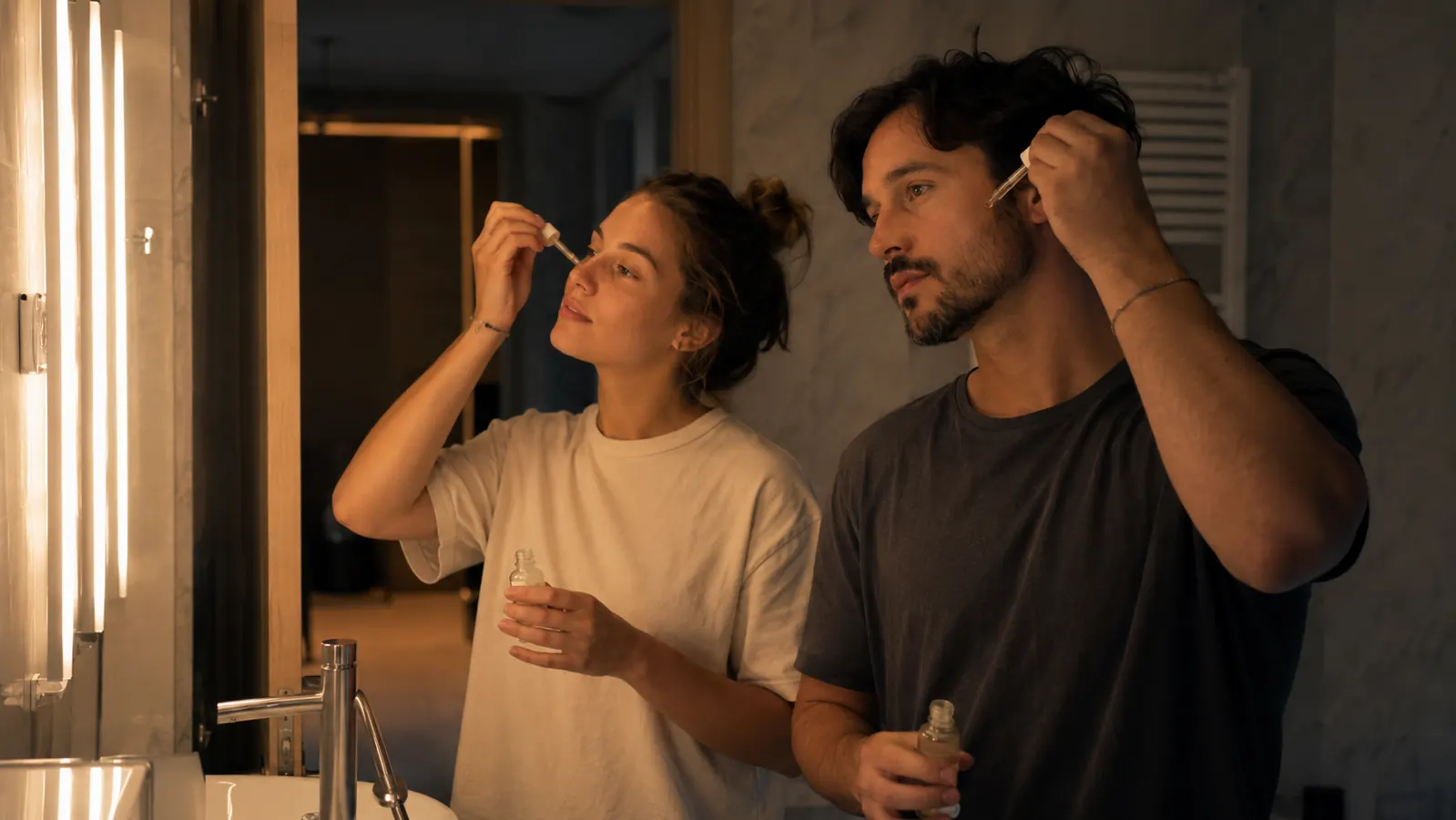
Three months ago, my partner Marcus and I made a deal. We would both start The Ordinary Retinol 1% in Squalane on the same night, stick with it through any irritation, and report back honestly. Marcus is 36, has combination-to-oily skin, and had never touched a retinoid before. I am 33, run dry with sensitivity along my jaw, and had tried a 0.5% retinol a few years back before abandoning it after two weeks of flaking. Neither of us had stellar skin going in. We both had uneven texture, some dullness, and a shared interest in slowing down the lines appearing around our eyes and foreheads.
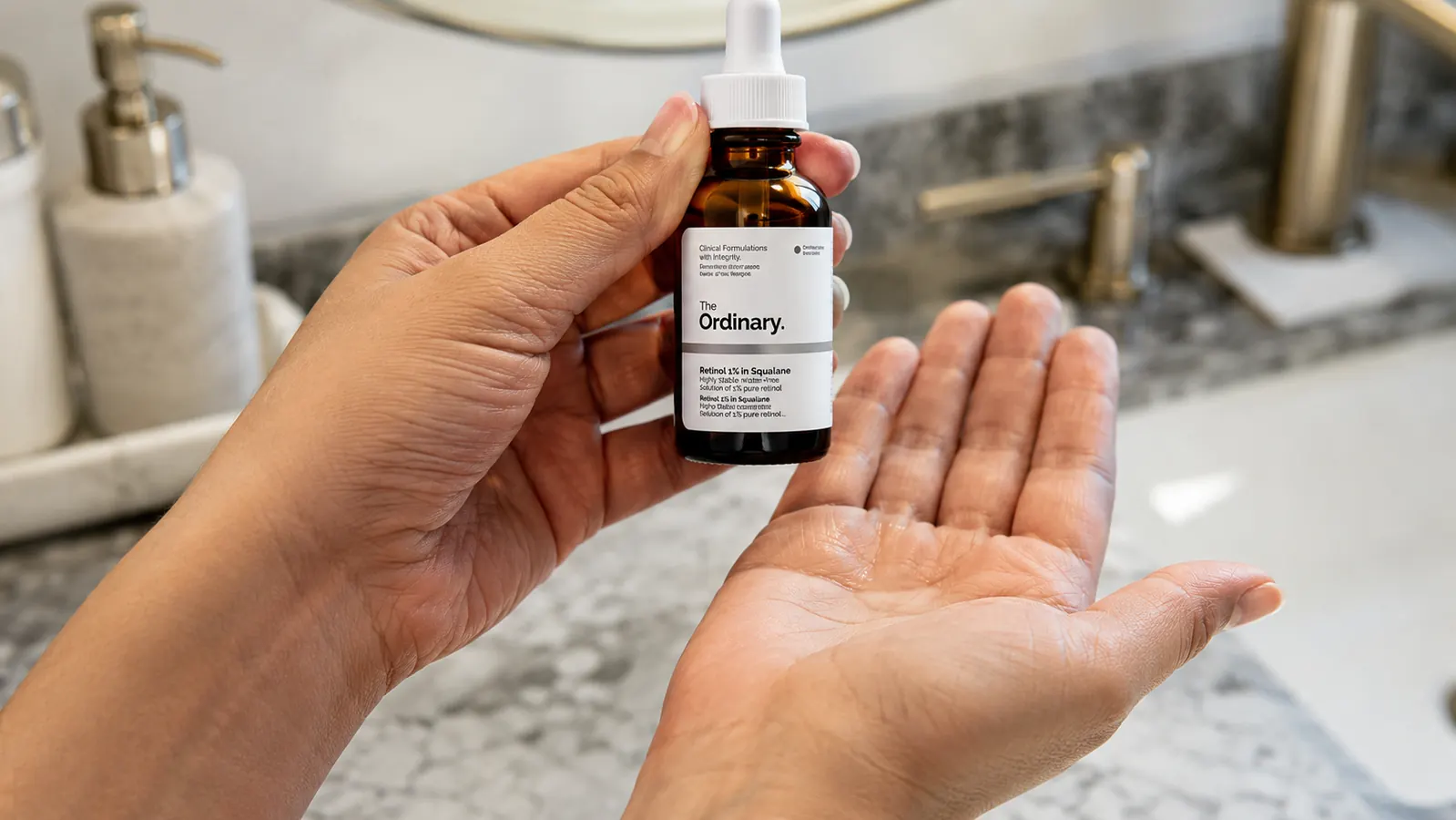
I tested this particular formula because it sits at a 1% concentration of pure retinol suspended in squalane, which is an emollient that is supposed to buffer irritation while keeping the retinol stable. It is not a retinoid ester, not a retinaldehyde, not a granactive retinoid variant. It is straightforward retinol at a moderately high strength, at a price point that makes it easy to stay consistent without rationing drops. By week twelve, we both had clear enough results to write this up.
The Quick Verdict
A serious retinol at a no-excuses price. Works best when introduced slowly, rewards consistency, and suits both genders without modification to the routine.
Amazon Check Today's Price →If your bathroom shelf still does not have a retinol, this is the one to start with.
The Ordinary Retinol 1% in Squalane is one of the most-reviewed retinol serums on Amazon, with 18,000-plus ratings and a 4.5-star average. Check the current price below.
Amazon Check Today's Price on Amazon →How We Used It Over 90 Days
Both of us applied it at night only, on clean dry skin, before moisturizer. The standard advice for 1% retinol is to start two nights per week and build up, so that is what we did. Weeks one and two: every third night. Weeks three through six: every other night. From week seven onward: nightly for Marcus, five nights per week for me because my jaw line was still reacting slightly on consecutive nights.
Dosage was two drops per application, distributed across the full face except the eye socket. We used a basic barrier moisturizer on top, nothing with additional actives. No other retinoids or exfoliants in the routine during the test period. Marcus used a fragrance-free face wash before applying. I double-cleansed with an oil cleanser first. Neither of us used the retinol on nights when we used a physical or chemical exfoliant.
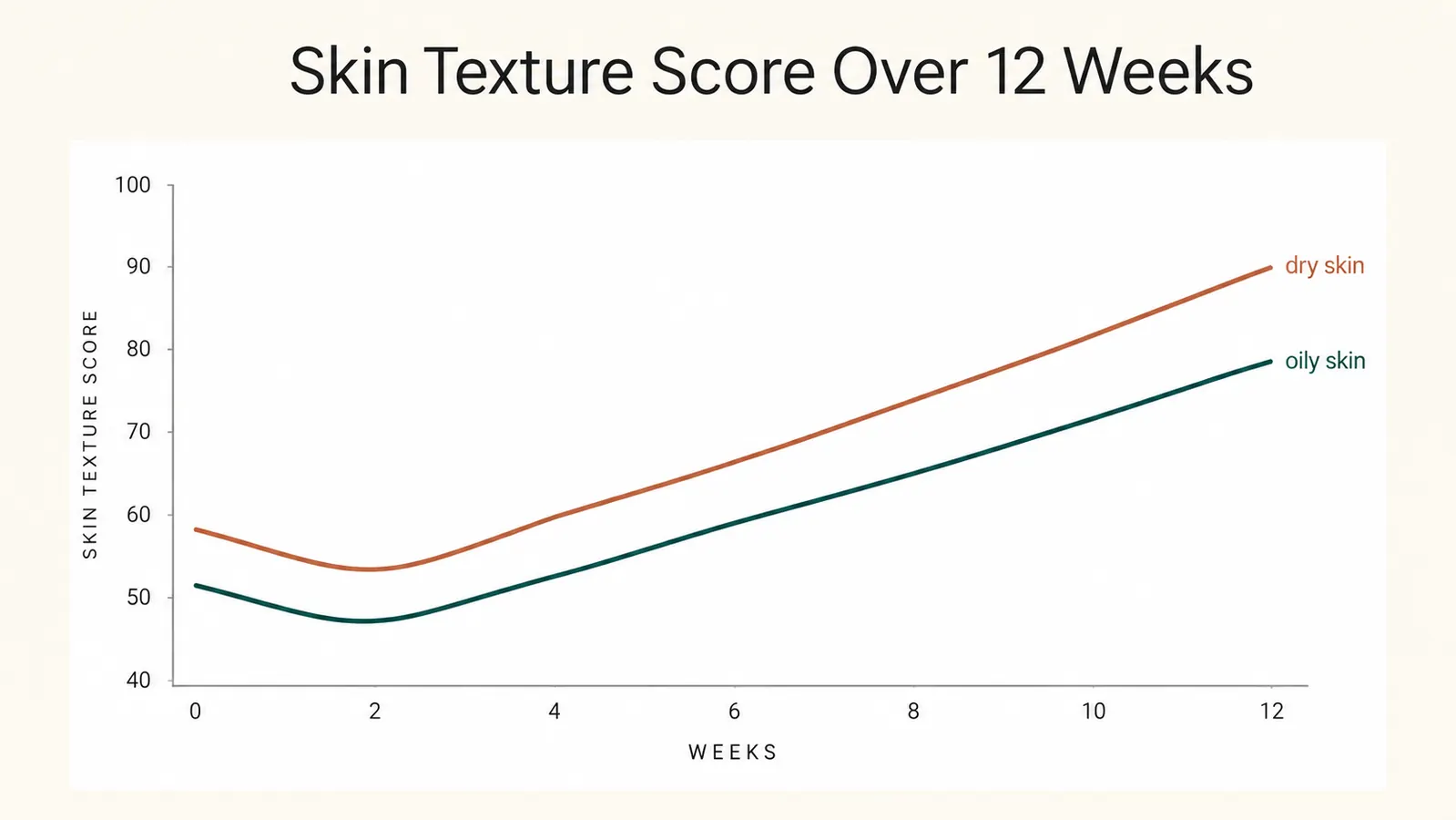
I photographed both faces in the same lighting at week zero, week four, week eight, and week twelve. The chart below tracks our self-assessed texture scores on a 1-to-10 scale. It is subjective, but it captures the shape of how things went, including the dip both of us felt around week two when initial purging and flaking picked up.
What Is Actually in This Serum
The formula is minimal on purpose. Retinol 1% is the active. Squalane is the carrier and the emollient doing most of the buffering work. Beyond that, the ingredient list is short: butylated hydroxytoluene as an antioxidant to keep the retinol from oxidizing, and a handful of texture stabilizers. No added fragrance. No alcohol. No essential oils. That sparseness is why it works for sensitive skin types when introduced at the right pace. There is nothing else in the formula picking fights with your skin barrier.
Retinol at 1% is not a beginner concentration. The Ordinary also makes a 0.2% and a 0.5% in the same squalane base, both of which are more appropriate starting points if you have never used a retinoid before. We chose the 1% deliberately because Marcus had been on a good skincare routine for about a year and I had already used a lower strength in the past. If you are brand new to retinoids and curious about where the 1% sits relative to their Granactive Retinoid formulas, the comparison piece on this site breaks down the differences in mechanism and irritation potential.
The texture out of the bottle is a light, almost water-thin oil. It absorbs quickly without a greasy film, which is important for Marcus since he is more congestion-prone. It does not pill under moisturizer when you wait 30 to 60 seconds before layering.
Results by Skin Type Over Twelve Weeks
Marcus saw the faster, cleaner results of the two of us. By week six his skin texture was noticeably smoother in the photographs, the small closed comedones across his forehead were clearing, and his skin had a more even, less blotchy tone on the mornings after application nights. By week twelve he was reporting fewer visible pores in his T-zone, which I was initially skeptical of attributing to retinol since pore size does not technically shrink, but the combination of increased cell turnover and reduced sebum build-up does make pores look tighter over time. He also noticed a reduction in the fine horizontal lines on his forehead that I can confirm from the photos.
My results took longer to appear and came with more adjustment friction. Weeks two through four brought flaking along my jaw and one stretch of dry, slightly red skin on my left cheek that I managed with a thicker barrier moisturizer and dropping back to every-third-night use temporarily. By week eight that had fully resolved and the skin looked better than before I started. My crow's feet are softer and the texture on my cheeks, which had been rough and slightly mottled, is genuinely smoother now. The improvement in skin evenness took about ten weeks to become obvious in photos.
One shared result worth noting: both of us, independently, commented around week eight that our skin looked less tired-looking in the morning. I think this is the cell turnover effect becoming cumulative. Retinol accelerates the rate at which skin cells are replaced, so over time you stop walking around in three-week-old skin. That fresher-surface effect was subtle but consistent after the two-month mark.
By week eight, we both independently said our skin looked less tired in the mornings. That was not a placebo. That was three months of accelerated cell turnover becoming visible.
The Adjustment Phase Is Real and Worth Planning For
The first few weeks on any retinol involve some degree of retinization: flaking, purging, temporary dryness, maybe some sensitivity to wind or cold. This formula is no exception. Squalane does buffer some of that, but 1% retinol is going to put your skin through a transition regardless of the carrier. Where I see people give up on retinol prematurely is when they start at too high a frequency for their skin tolerance, experience irritation, and conclude the product does not work for them.
If you are newer to retinoids or want a detailed protocol for avoiding irritation during the adjustment period, the how-to guide on this site covers the ramp-up schedule we actually used, including how to sandwich retinol between moisturizer layers if your skin is particularly reactive.
The most important variable is patience. Neither of us had clear, visible improvements before week six. Anyone who tells you a retinol serum transformed their skin in two weeks is measuring something other than skin structure. Real collagen and cellular turnover changes take at minimum 90 days to become photographable.
How It Compares to Other Retinol Options We Have Tried
I used a well-reviewed drugstore retinol cream prior to this test. The main difference is that cream-based retinols tend to include more emollients that can feel heavier on the skin and clog pores for some people. This formula is oil-based and thin enough that Marcus, with his oily skin, found it more comfortable than any retinol cream I showed him. The squalane carrier is also non-comedogenic, which matters for congestion-prone skin types.
The Ordinary also sells a Granactive Retinoid 2% Emulsion that is often recommended as a gentler starting point. The mechanism is different: granactive retinoid (hydroxypinacolone retinoate) binds to retinoid receptors directly without conversion, which means less irritation but also less evidence at this point for equivalent efficacy to retinol. For those still deciding, that comparison is covered in the retinol versus granactive retinoid article linked in the navigation.
In terms of price, this is one of the more affordable retinol serums available, and the 30ml bottle has lasted us both three months of consistent use with drops to spare. The value argument is straightforward.
What I Liked
- 1% pure retinol at an accessible price, no compromises on active concentration
- Squalane base is non-comedogenic and suitable for oily and combination skin
- Minimal ingredient list means fewer potential irritants beyond the retinol itself
- No added fragrance or essential oils, works well for fragrance-sensitive users
- Clear visible results at 90 days on both dry sensitive and oily combination skin types
- Thin texture absorbs quickly and does not pill under moisturizer
Where It Falls Short
- 1% is not appropriate for retinol beginners; start with 0.2% or 0.5% first
- Initial adjustment phase (weeks 2 to 4) can involve real flaking and sensitivity
- No visible results for at least 6 weeks, requires patience and consistency
- Amber glass bottle does not have a graduated dropper, making precise dosing a minor challenge
- Does not include any peptides or humectants to support the barrier during retinization

Who This Is For
This serum is the right pick for anyone who has already been through a lower-strength retinoid and is ready to step up, or for someone who has been using a general skincare routine for at least six months and wants to add a real anti-aging active. It suits both genders without any adjustment to the application method. Marcus and I used identical protocols and both saw meaningful results. If the person sharing your bathroom has been curious about retinol, there is no reason you cannot share a bottle and start at the same time.
It is also a reasonable choice for someone who is tired of spending significant money on anti-aging serums. The concentration here is the same 1% you would find in products priced significantly higher. What you are not getting is additional actives like niacinamide, peptides, or hyaluronic acid in the same bottle. If those matter to you, add them separately, do not pay a premium for a bundled formula.
Who Should Skip It
Skip the 1% if you have never used a retinoid before. The adjustment discomfort at this concentration is a genuine barrier to sticking with it, and sticking with it is the whole point. Start at 0.2% or 0.5% in the same squalane base, build your skin's tolerance over three to six months, then step up. Also skip it if you are pregnant or nursing, since retinoids are contraindicated during pregnancy regardless of concentration. And if your skin is currently compromised, dealing with an active rash, eczema flare, or a damaged barrier from other actives, let your barrier recover before introducing any retinol.
For couples where one partner has very reactive skin and the other does not, the more sensitive person should start at a lower strength. You do not both need to be on the same concentration. Marcus's skin handled the 1% from week one with only mild initial dryness. My skin needed a longer ramp-up. That is normal across different skin types and not a sign that one of you is doing it wrong.
Ready to start? The Ordinary Retinol 1% in Squalane is the version worth committing to.
Over 18,000 reviews on Amazon and a 4.5-star average. This is the retinol we kept using past the 90-day mark and will continue using. Check today's price and stock status below.
Amazon Check Today's Price on Amazon →