
If you have spent any time on The Ordinary's product page, you have probably noticed they sell two very different retinoid formulas at very different price points. One says "Retinol 1%" and the other says "Granactive Retinoid 2% Emulsion." Both claim to target fine lines and uneven texture. Both use the same stripped-back packaging. And if you are new to retinoids, the choice between them is genuinely confusing.
I tested both on my own skin over a combined six months, and my partner tried the Retinol 1% alongside me for a full three-month stretch. The short answer: these are not interchangeable products, and picking the wrong one for your skin's current tolerance level leads to either unnecessary irritation or underwhelming results. Here is how to decide.
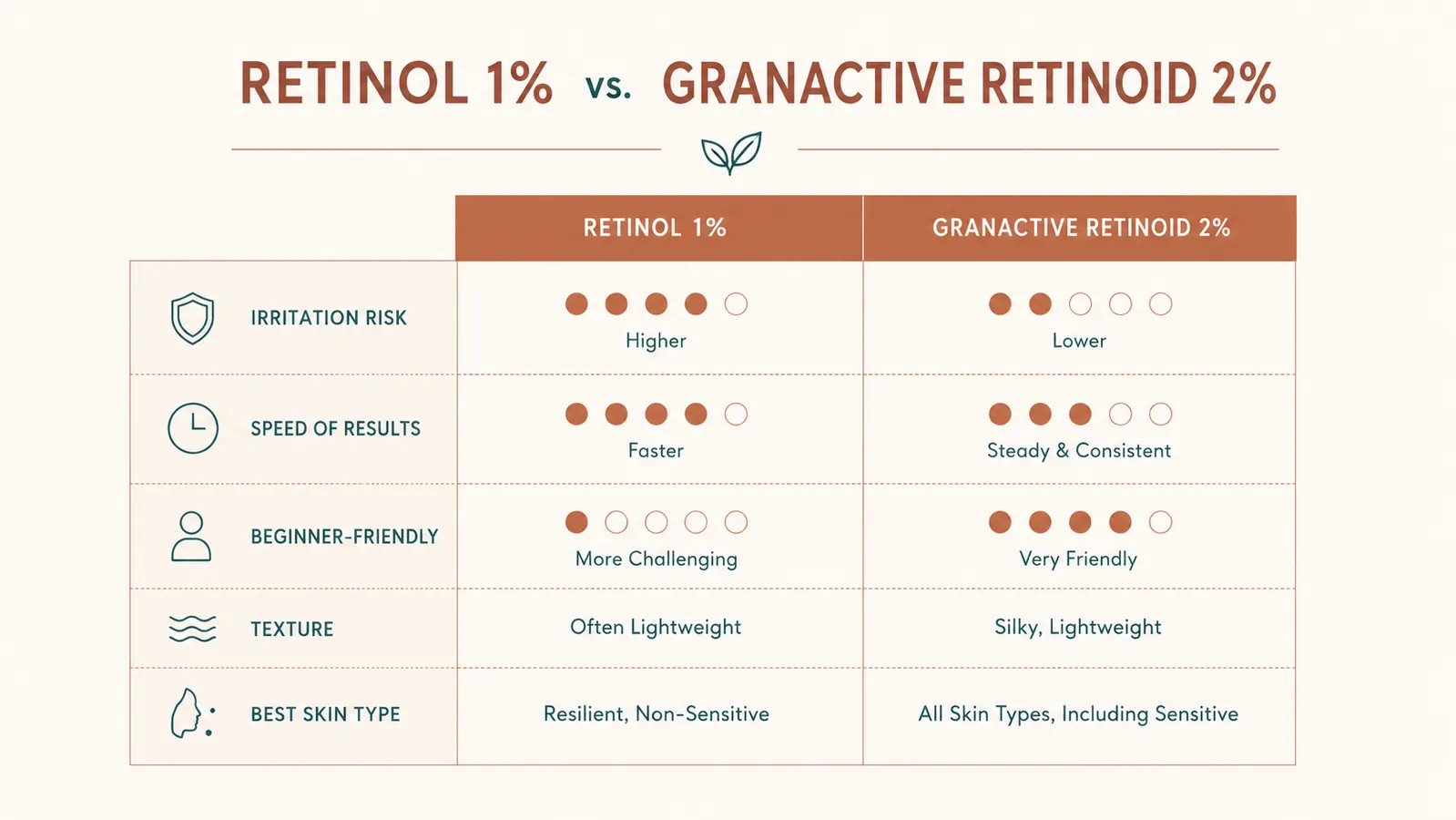
| label | left | right |
| label | left | right |
| label | left | right |
| label | left | right |
| label | left | right |
| label | left | right |
| label | left | right |
| label | left | right |
Already familiar with retinol? The 1% in Squalane is where the results live.
If your skin has built up some tolerance to actives, The Ordinary Retinol 1% in Squalane delivers the speed and potency that mild retinoids cannot match. Over 18,000 verified reviews back it up.
Amazon Check Today's Price on Amazon →What These Two Formulas Actually Are
This distinction matters more than the marketing copy suggests. The Retinol 1% uses pure retinol, which is classic vitamin A. When you apply it to skin, your cells have to convert it through two enzymatic steps before it becomes the active form (retinoic acid) that actually binds to receptors and drives cell turnover. That conversion process is what causes the irritation, flaking, and purging that trips up so many first-timers.
The Granactive Retinoid 2% Emulsion uses Hydroxypinacolone Retinoate, often abbreviated as HPR. It is a retinoid ester that binds directly to retinoid receptors without that same conversion pathway. That is why it is far less irritating. The tradeoff is that it moves slower. The skin changes you see at eight weeks on the Retinol 1% might not appear until week fourteen on the Granactive version. Neither is wrong. They just serve different starting points.
Where Retinol 1% in Squalane Wins
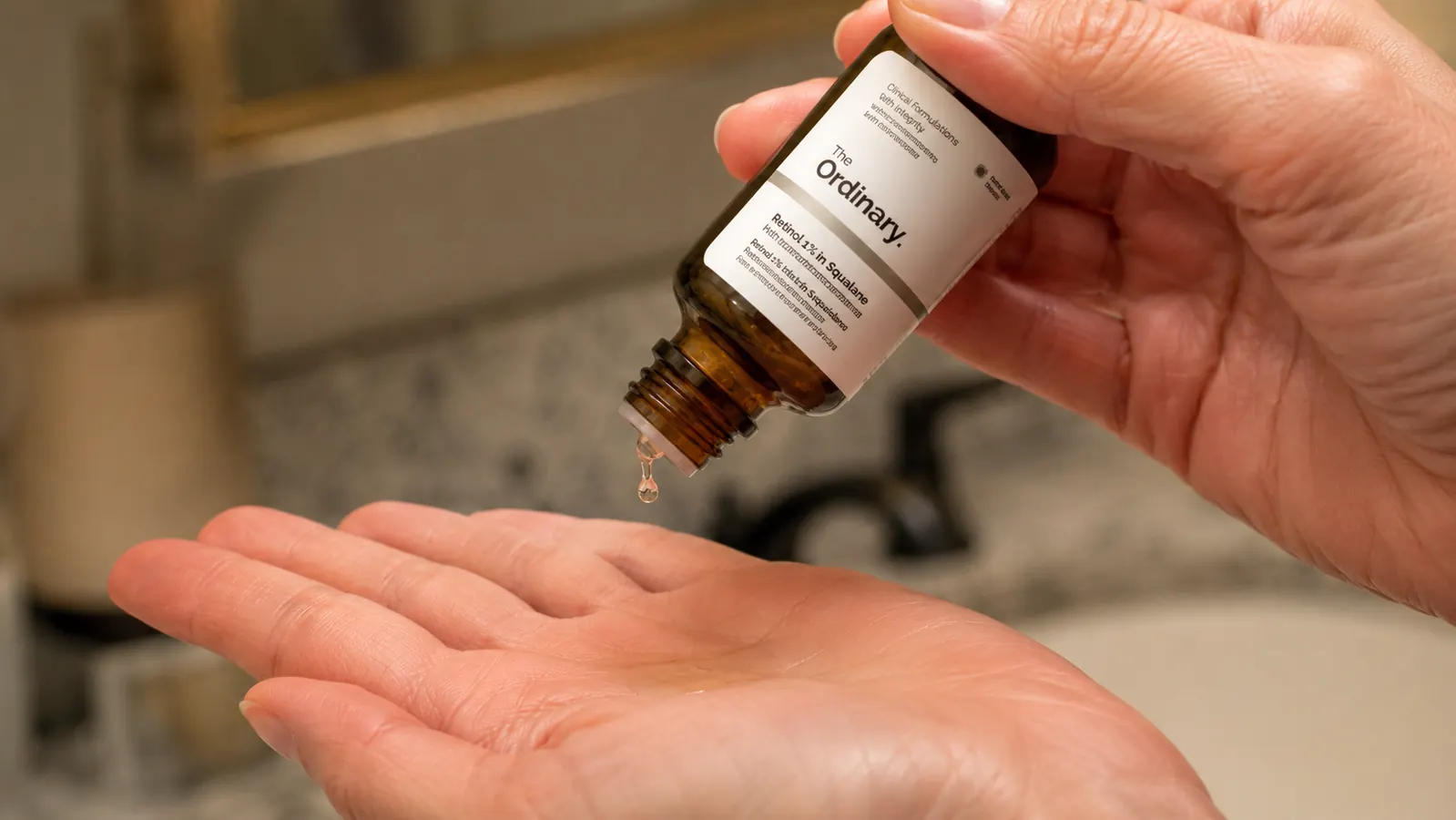
If your skin can handle it, pure retinol produces changes that are hard to argue with. My partner, who has oily, resilient skin and had already used a 0.5% retinol serum for four months before we switched him to this one, saw visible smoothing of forehead texture and a noticeable reduction in enlarged pores within about seven weeks. He tolerated the 1% strength without significant flaking, though he did experience some initial tightness in weeks two and three.
The squalane base is smart formulation work. Squalane is a lightweight skin-identical oil that sits in the formula as both a carrier and a buffer, reducing the raw irritation you would get from retinol suspended in a watery serum. The texture is slightly slick on application but absorbs within a few minutes and does not feel greasy overnight. For anyone who has tried a harsher retinol formula and found the texture unbearable, this one is noticeably more comfortable.
The other thing the 1% concentration delivers is confidence. There is a ceiling you hit with milder retinoids where you suspect the formula is not doing much. At 1%, you know it is working, partly because your skin tells you so in the first few weeks. That initial adjustment period, frustrating as it is, signals genuine cellular activity.
Where Granactive Retinoid 2% Emulsion Wins
I used the Granactive Retinoid 2% Emulsion for four months before switching to the Retinol 1%, and I would not call those months wasted. My skin at the time was reactive, dealing with a combination of post-summer sensitivity and a compromised barrier from overusing exfoliants. The Granactive formula let me maintain retinoid benefits without pushing my skin further toward irritation.
The emulsion texture is genuinely pleasant. It applies like a thin moisturizer, absorbs fast, and does not require any special buffering technique. Beginners often hear warnings about applying retinol over moisturizer or sandwiching it between hydrating layers to reduce irritation. With the Granactive version, most skin types can apply it directly without those precautions. That simplicity matters if you are still building your routine and do not want to worry about layering order.
The results over time are real, just slower. At the four-month mark I did see meaningful improvement in skin tone evenness and a softening of fine lines around my eyes. Anyone coming from a vitamin C or niacinamide routine and stepping into retinoids for the first time will likely find the Granactive version a much more manageable entry point.
The Retinol 1% is not the formula you earn by suffering through weaker ones first. It is the formula you choose when your skin is already used to actives and ready for a stronger push.
Skin Type and Experience Level: The Deciding Factor
The single most useful framework for choosing between these two comes down to two questions: How tolerant is your skin to actives right now, and how quickly do you want results? If you have been using any form of retinol or retinoid for at least three to four months and your skin is not currently sensitized, the Retinol 1% is the better pick. You will get more out of it, faster, and the squalane base makes the adjustment more manageable than most pure-retinol formulas at this strength.
If you are starting from scratch, have dry or sensitive skin, or are coming off a period of barrier disruption (over-exfoliation, harsh weather, a reaction to another active), the Granactive Retinoid 2% Emulsion is the smarter starting point. Spend four to six months on it, let your skin build tolerance and a stable barrier, and then you can step up to the Retinol 1% from a much stronger position. Skipping that foundation and going straight to 1% pure retinol often sets people back two months while their skin repairs itself.
For couples using a shared routine, this often means one person is on each formula. My partner moved to the Retinol 1% while I was still working through the Granactive. That is not a failure to sync up. It is just two people at different places in their skin's readiness for stronger actives.
Texture, Application, and Routine Placement
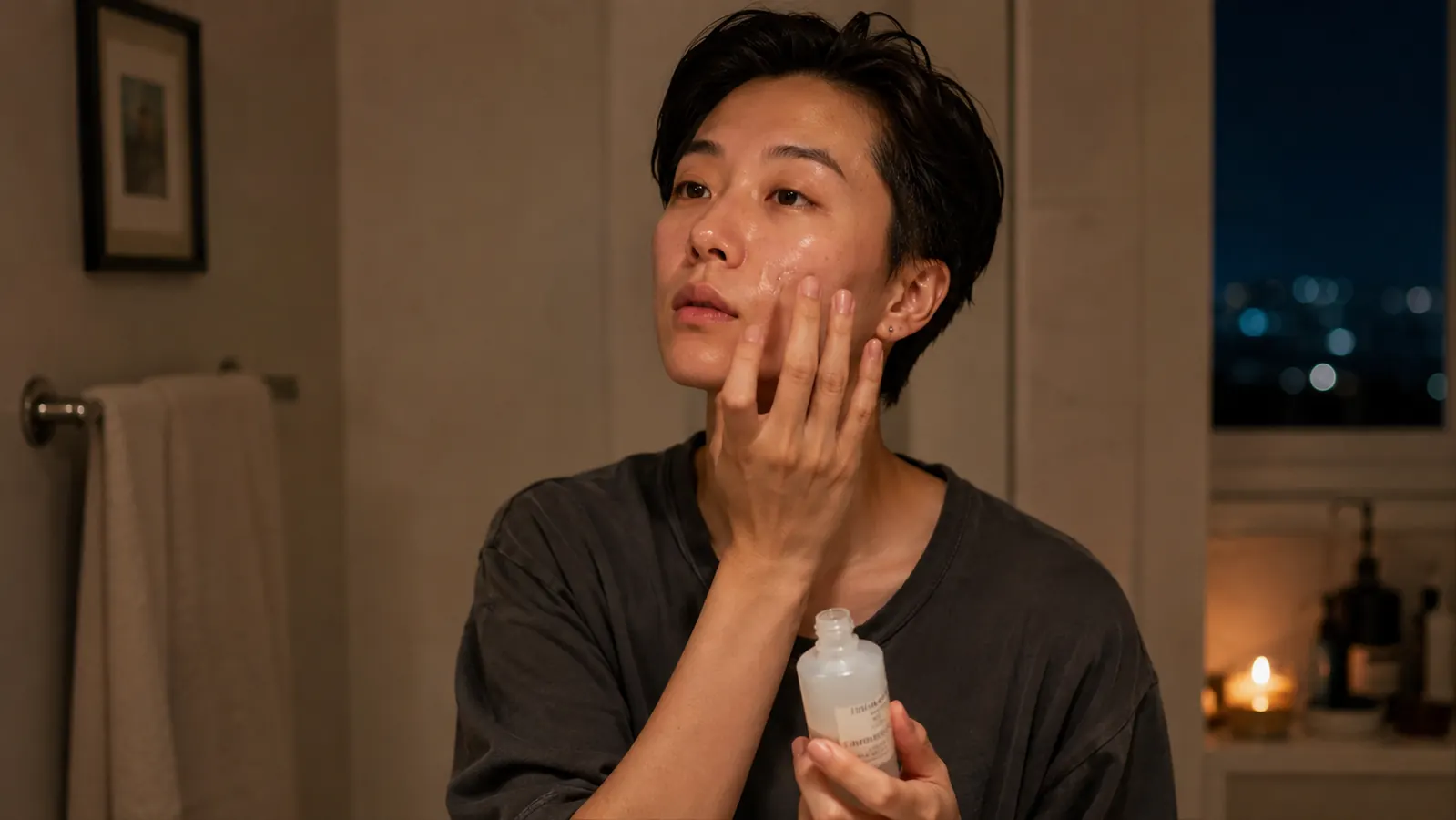
Both formulas go on at night, after cleansing and any water-based serums, before moisturizer. That part is the same. The texture difference is real enough to affect how people stick with a product long-term. The Retinol 1% in Squalane feels like a lightweight facial oil. A few drops warm between fingers and press into skin rather than rub. It sits on top for 60 to 90 seconds before fully absorbing. Some people love that tactile feeling. Others find any oil-based product makes them feel greasy.
The Granactive Retinoid 2% Emulsion is a milky texture that behaves more like a serum. It disappears quickly and leaves a smooth, almost velvet feel on skin. If texture is the thing that makes or breaks whether you actually follow through with a routine every night, the Granactive version has a significant advantage. The Retinol 1% rewards patience. The Granactive version rewards consistency.
Who Should Buy Which
Buy The Ordinary Retinol 1% in Squalane if you have used a lower-strength retinol or retinoid for at least three months, your skin barrier is currently stable, you have oily or combination skin, or you want the most potency per dollar in the retinoid category. At this price point, there is no competing formula at 1% pure retinol that offers this much cushion via its base oil.
Buy The Ordinary Granactive Retinoid 2% Emulsion if you are new to retinoids entirely, your skin trends dry or reactive, you have been through a period of irritation recently, or you just want a formula you can apply without any buffering technique. The slower onset is the cost. The stability and tolerability are the payoff.
If you are unsure which category you fall into, start with the Granactive. You can always step up. You cannot unstep down once your skin barrier is already compromised and you are stuck waiting two weeks for redness and flaking to settle before you can use anything else. For a deeper look at long-term results on the Retinol 1% specifically, see our 90-day couples test. And if you want a practical guide to introducing either formula without irritation, the step-by-step introduction guide covers buffer techniques, frequency schedules, and what to do if your skin overreacts.
Ready to step up to 1%? The Ordinary's Retinol 1% in Squalane is the most cost-effective way to get there.
With 18,000+ reviews and a squalane base that buffers irritation better than most pure-retinol formulas at this strength, it is the retinol we keep restocking. Check the current price before it sells out.
Amazon Check Today's Price on Amazon →