
Retinol has the most consistent evidence behind it of any over-the-counter anti-aging ingredient. It speeds cell turnover, stimulates collagen production, and clears clogged pores. It is also, if you introduce it carelessly, the thing most likely to leave you with a raw, flaky, irritated face for three weeks straight. I have watched my partner make that mistake. I made my own version of it years before I knew better. Neither of us needed to.
The good news is that retinol sensitivity is almost entirely avoidable when you follow a sensible protocol. This guide walks through exactly how my partner and I both got onto The Ordinary Retinol 1% in Squalane without a single day of visible peeling or the kind of stinging that makes people abandon retinoids permanently. The steps are not complicated. They just require patience and a bit of sequencing.
Before You Start: The Retinol We Recommend for Beginners and Upgraders Alike
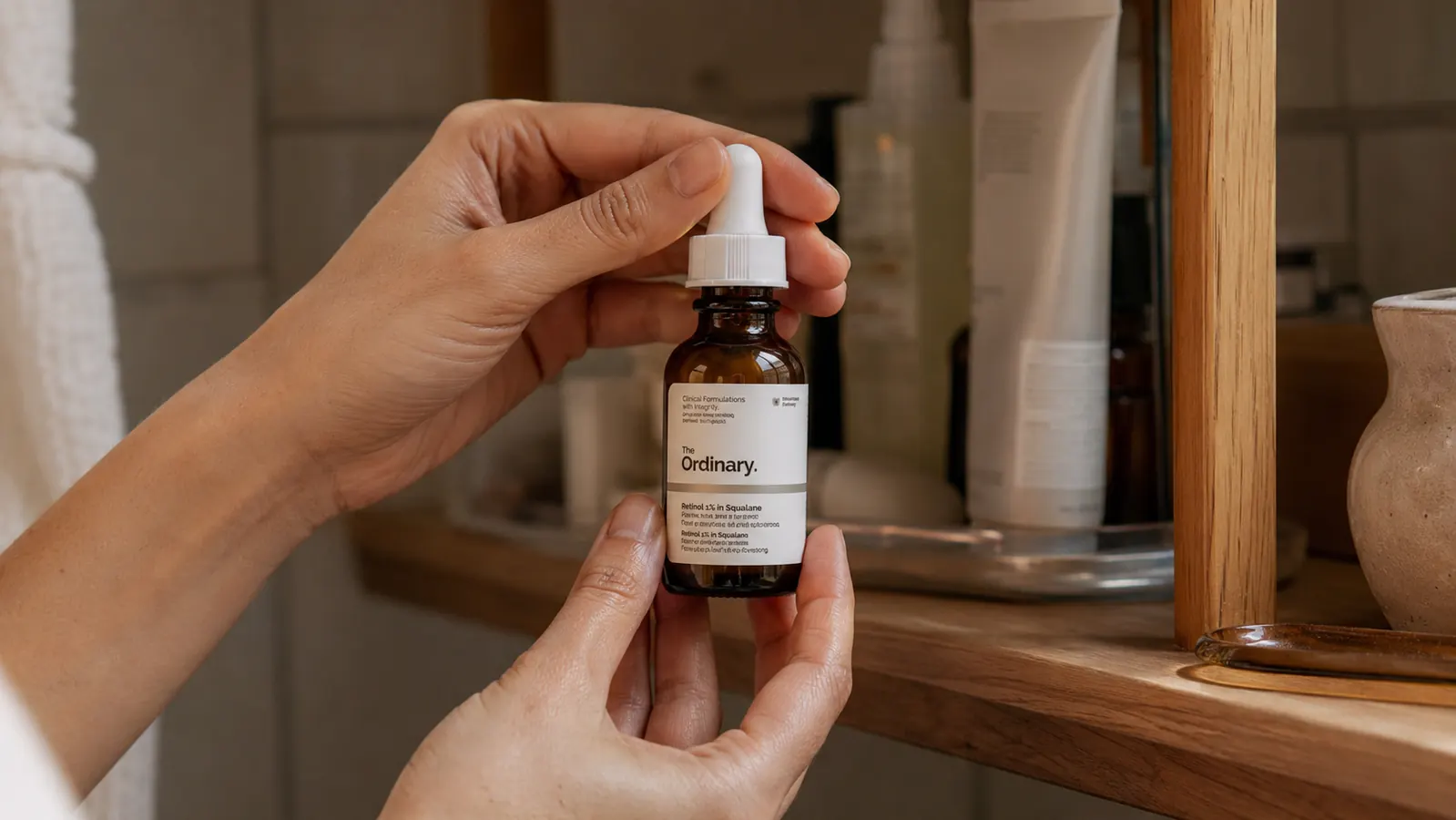
The Ordinary Retinol 1% in Squalane is our starting point for this guide. It delivers a research-backed 1% concentration suspended in squalane, a lightweight emollient that buffers irritation while the retinol does its work. Over 18,000 reviews on Amazon, rated 4.5 out of 5 stars. If you are just beginning, this is the version to reach for.
Amazon Check Today's Price on Amazon →Step 1: Audit Your Routine Before You Add Anything
The most common reason people react badly to retinol has nothing to do with the retinol itself. It has to do with what else they are already using. Exfoliating acids, benzoyl peroxide, vitamin C at low pH, and physical scrubs all compromise the skin barrier in ways that make a new retinoid far more likely to cause irritation. Before you add retinol, I would spend one week stripping your routine down to a gentle cleanser, a simple moisturizer, and an SPF in the morning. That is it.
My partner had been using a salicylic acid cleanser every single morning and evening when he decided to try retinol. The first two nights went fine. By night four he had a tight, burning sensation along his jawline that he attributed to the retinol. We pulled everything back, gave his barrier a week to recover, then reintroduced the retinol on a clean routine. No reaction at all. The salicylic acid had been the problem, not the retinol. Audit first.
Also check your cleanser. Foaming cleansers with sulfates can strip skin significantly, especially at night when you wash off sunscreen. If your face feels tight immediately after washing, your cleanser is probably more stripping than your barrier wants before a retinoid goes on. Swap to a low-pH gel or a creamy non-foaming wash for the intro period. You can always return to your old cleanser once your skin has built tolerance.
Step 2: Start With the Right Application Frequency
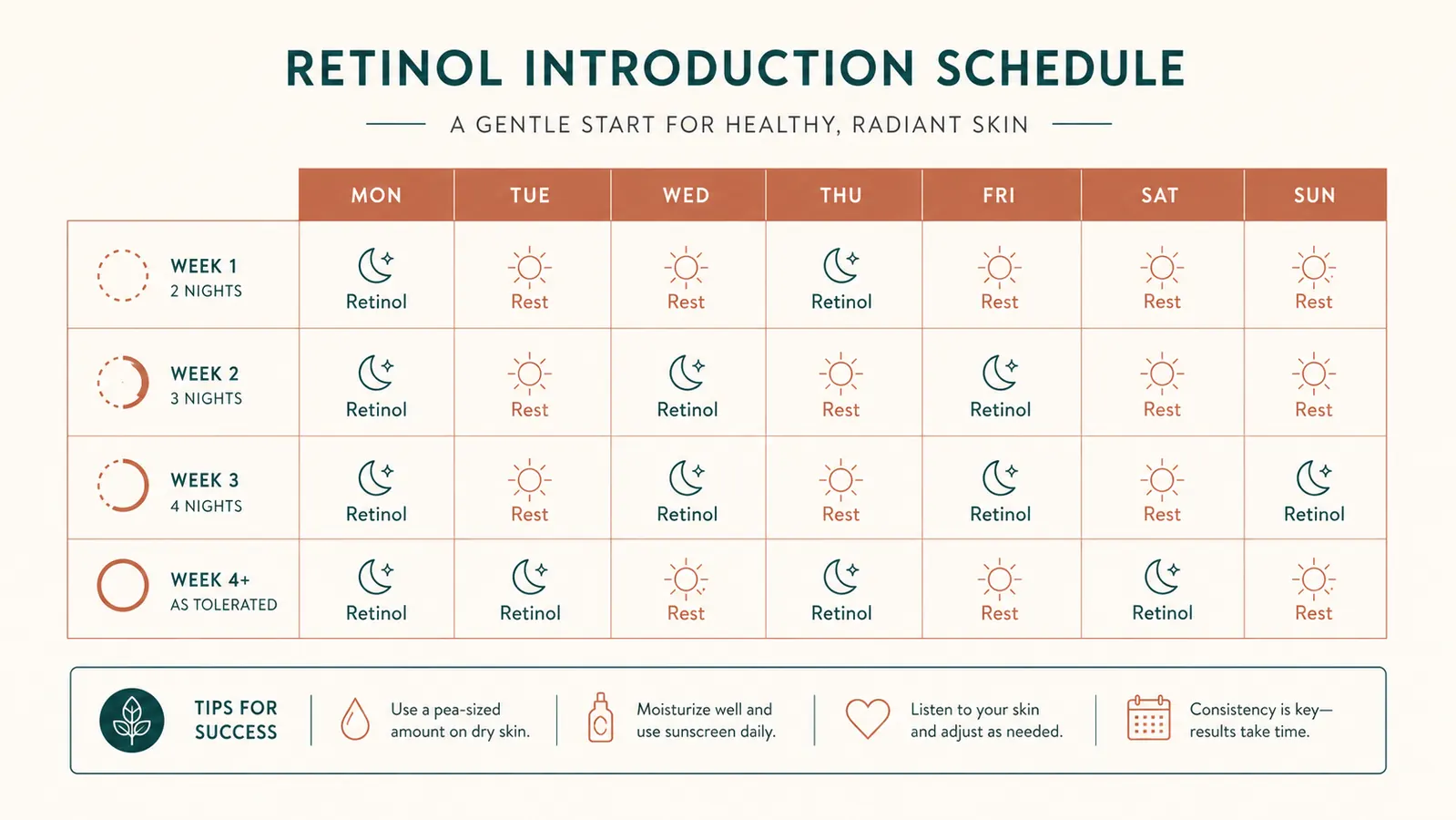
The rule I follow, and the one most board-certified dermatologists recommend, is to start at two nights per week for the first month. Not every other night. Two nights. Let the skin recover for two or three full days between applications. A Monday-Thursday schedule works well. The goal in the first four weeks is not results. It is tolerance-building. You are training your skin to handle an ingredient that will, eventually, meaningfully change it.
I kept a note on my phone marking which nights I applied. That sounds overly careful, but when you are tired at ten at night it is genuinely easy to forget whether you used retinol the previous evening, especially in the first few weeks when there is no visible change to remind you. After four to six weeks of twice-weekly use with zero reaction, you move to every other night. After another four to six weeks, you can assess whether nightly use makes sense for your skin. Some people find every other night is their permanent sweet spot, and that is completely fine.
Step 3: Use the Sandwich Method for the First Two Weeks
The sandwich method is exactly what it sounds like. You apply a thin layer of moisturizer to clean, dry skin. Then you apply your retinol. Then you apply another thin layer of moisturizer on top. The moisturizer layers dilute the retinol contact with your barrier slightly and reduce the speed of penetration. This lowers irritation potential without meaningfully reducing efficacy over a month-long timeline.
The Ordinary Retinol 1% in Squalane is already formulated with squalane as a carrier, which means it has a built-in buffer compared to water-based retinol serums. When we first started using it, I used the sandwich method and my partner went straight to bare skin. He noticed mild tightness by week two. I had no reaction at all. After that observation, he switched to the sandwich approach for the next two weeks and the tightness resolved. The extra moisturizer step adds maybe thirty seconds to your routine and meaningfully changes the experience for sensitive or dry skin types.
After two weeks of the sandwich method with no irritation, you can test applying the retinol directly to clean, dry skin and following with moisturizer afterward. Most people can make this transition without any reaction once their barrier has adjusted. If you notice tightness or flaking when you drop the sandwich method, go back to it for another two weeks. There is no deadline here.

Step 4: Apply Only to Completely Dry Skin
Wet or damp skin dramatically increases the penetration rate of retinol. This is not a myth. The skin barrier is temporarily more permeable right after washing, and retinol applied to damp skin can penetrate more aggressively, increasing the likelihood of irritation and micro-inflammation. After you cleanse, wait a full ten to fifteen minutes before applying retinol. Do your brushing, floss, do whatever else you do in the bathroom, then come back to the serum.
I used a timer for the first few weeks because I kept rushing through my routine. It felt unnecessarily cautious at the time, but I had zero irritation across the entire intro period. My partner skipped the wait on several nights and noticed slightly more sensitivity on those days. Small variable, real difference. The timing step costs nothing.
Step 5: Protect Your Skin in the Morning, Every Morning
Retinol increases photosensitivity. You are not going to damage yourself by stepping outside without SPF once in a while, but you will slow your results and raise your risk of irritation if you regularly skip sun protection during active retinol use. A broad-spectrum SPF 30 or higher applied every morning is not optional when you are using retinoids. It is part of the protocol.
This matters especially in the first few months when your skin is turning over faster than usual and the new skin coming to the surface is more vulnerable. We both noticed that on days when one of us skipped SPF and spent more than an hour outside, there was a faint tightness or sensitivity that evening that was not present on sunscreen days. The correlation was consistent enough that we stopped testing it. Morning SPF became non-negotiable.
A mineral SPF is often more tolerable for reactive skin types during the retinol intro period. Chemical SPF filters, particularly avobenzone and oxybenzone, can occasionally cause stinging in a compromised barrier. If you have never paid much attention to your SPF formula, now is a good time to pick one you actually enjoy wearing, because the consistency matters more than the specific product.
What Else Helps During the Introduction Period
A ceramide-rich moisturizer is the most useful supporting ingredient during any retinol intro. Ceramides are the lipids that hold your skin barrier together, and a good ceramide moisturizer reinforces that barrier against the increased cell turnover retinol drives. Niacinamide is also useful, it calms the mild inflammation that can come with retinol adaptation and supports barrier function. What you want to avoid during the intro period: glycolic acid, lactic acid, salicylic acid, and any strong physical exfoliant. Hold those off until you are at least eight weeks in and your tolerance is established. Once the barrier has adjusted, reintroducing acids is straightforward. I now use a glycolic toner twice a week alongside nightly retinol and have no reaction. But I did not combine them in the first two months.
Hydration is also doing more work than most people give it credit for. When skin is well-hydrated, the stratum corneum is more resilient and less prone to the micro-cracking that shows up as visible flaking. During active retinol use, drinking enough water and using a humidifier in winter months genuinely helps. It is not a skincare marketing claim. Dry air depletes the skin barrier faster than most topicals can repair it, and retinol accelerates that dehydration loop if you are not actively counterbalancing it.
The people who give up on retinol almost always introduced it too fast. Two nights a week, a barrier-friendly moisturizer, dry skin before application, and morning SPF. Four habits. That is the entire protocol.
If you want more detail on how The Ordinary Retinol 1% in Squalane specifically performed over a 90-day window, including how it compared across two different skin types, the long-term review covers it in depth. And if you are still deciding between the Retinol 1% and The Ordinary's gentler Granactive Retinoid 2% Emulsion, the comparison piece breaks down exactly which one to start with based on your skin history.
Ready to Start? The Ordinary Retinol 1% in Squalane Is the Protocol-Friendly Pick
The Ordinary Retinol 1% in Squalane pairs a proven concentration with squalane's built-in buffering, making it one of the most forgiving entry points for anyone following a careful intro schedule. It is the serum we keep in our shared cabinet and would recommend to anyone following the steps above.
Amazon Check Today's Price on Amazon →