
I'll be honest: I'd been skipping vitamin C for years. I had a $78 serum that oxidized by week three every single time, leaving that rancid banana smell and a muddy orange residue in the pump. My partner, who has oilier and slightly more reactive skin than mine, had his own reason to avoid it: every high-end vitamin C he tried left his face looking red for an hour after application. So when I picked up CeraVe Vitamin C Serum in January, mostly because it was the only vitamin C at the drugstore with a ceramide complex listed on the label, I didn't expect much. We agreed to use it every morning for 60 days before passing judgment. This is what we found.
For context on our skin types: I'm 38, combination-to-dry, with some mild hyperpigmentation on my left cheek from a breakout scar about two years old. My partner is 41, oily T-zone, no acne but some persistent post-shave redness along his jawline. Different concerns, same serum, same 60-day window. We applied it after cleansing and before moisturizer, every morning without exception.
The Quick Verdict
A genuinely solid vitamin C serum that oxidizes more slowly than most, plays well with ceramide-based moisturizers, and delivers visible brightening for both dry and oily skin types without the redness that plagues pricier L-ascorbic formulas.
Amazon Check Today's Price →If oxidation and irritation have kept you away from vitamin C, this formula is worth a serious look.
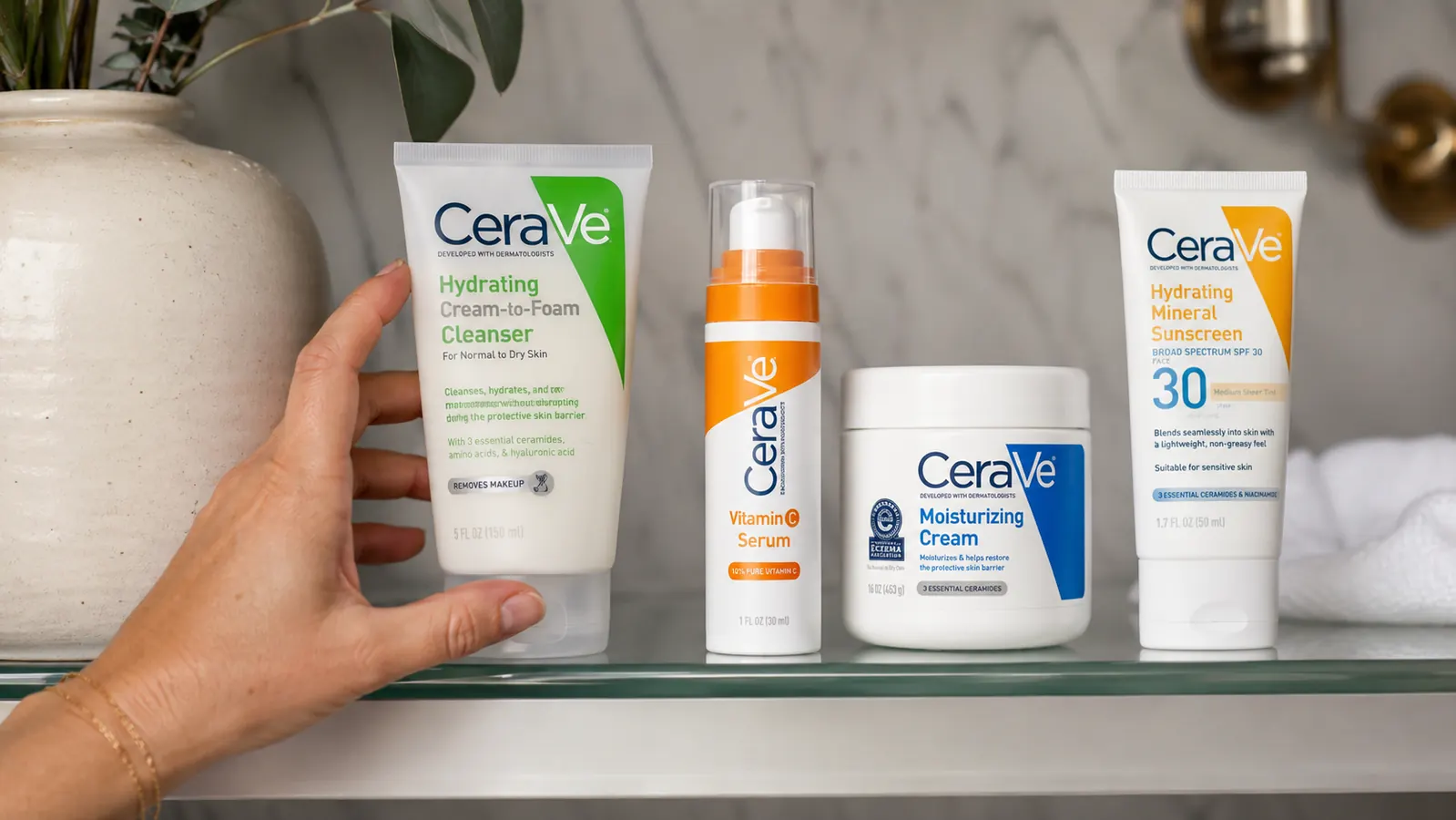
CeraVe's vitamin C serum uses 10% pure L-ascorbic acid stabilized with hyaluronic acid and three ceramides. It's one of the few drugstore serums that addresses the stability and barrier issues that cause most vitamin C experiments to fail.
Amazon Check Today's Price on Amazon →How I've Used It: The 60-Day Protocol
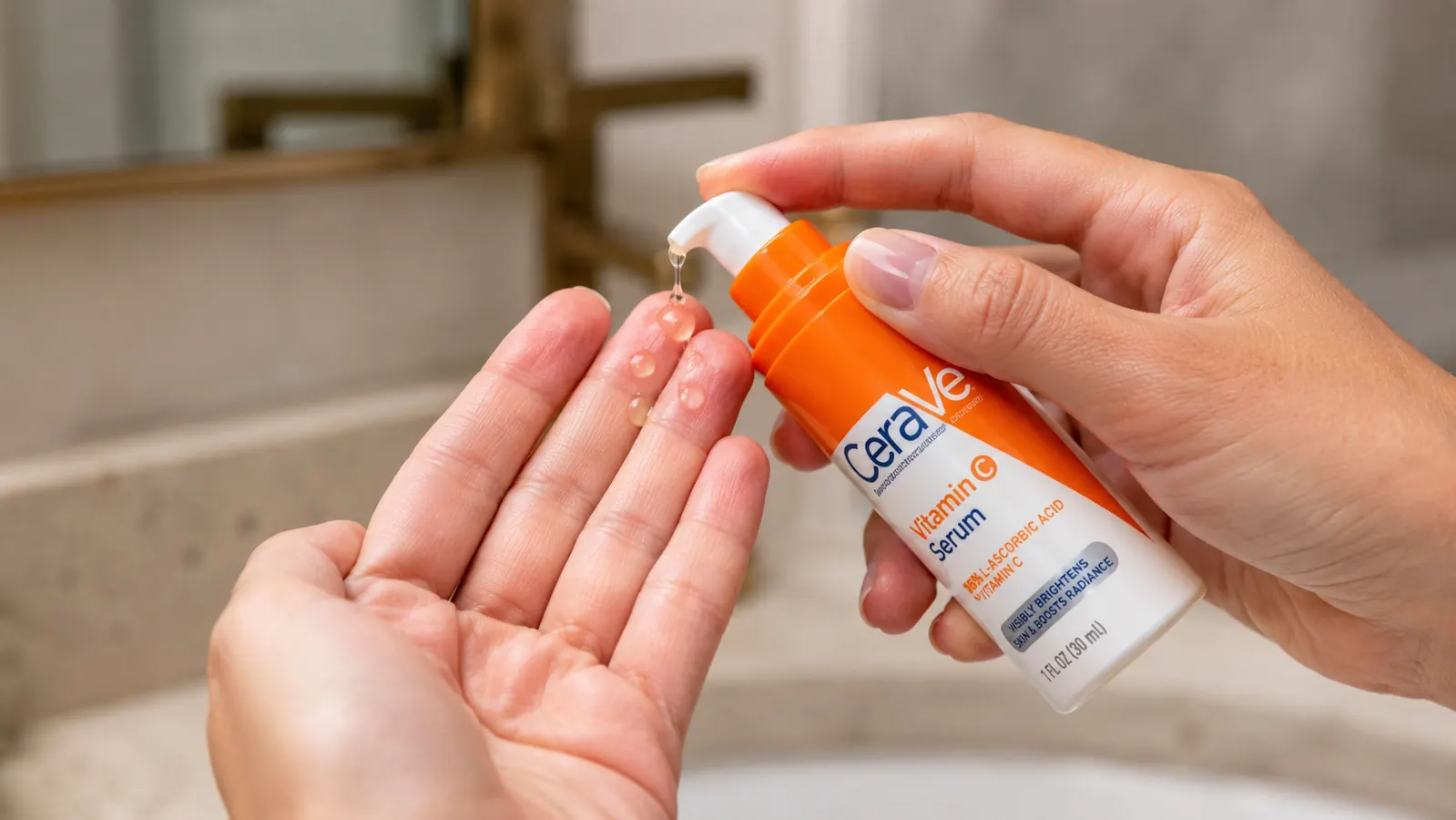
We kept the protocol simple on purpose. Every morning: gentle cleanser, two to three pump presses of the serum patted onto damp skin, one minute to absorb, then moisturizer, then SPF 30 or higher. No other active ingredients layered on top in the morning. We did use niacinamide at night during this period, which I'll note because a few readers asked about stacking. The point was to give the vitamin C a clean window to show results without interference.
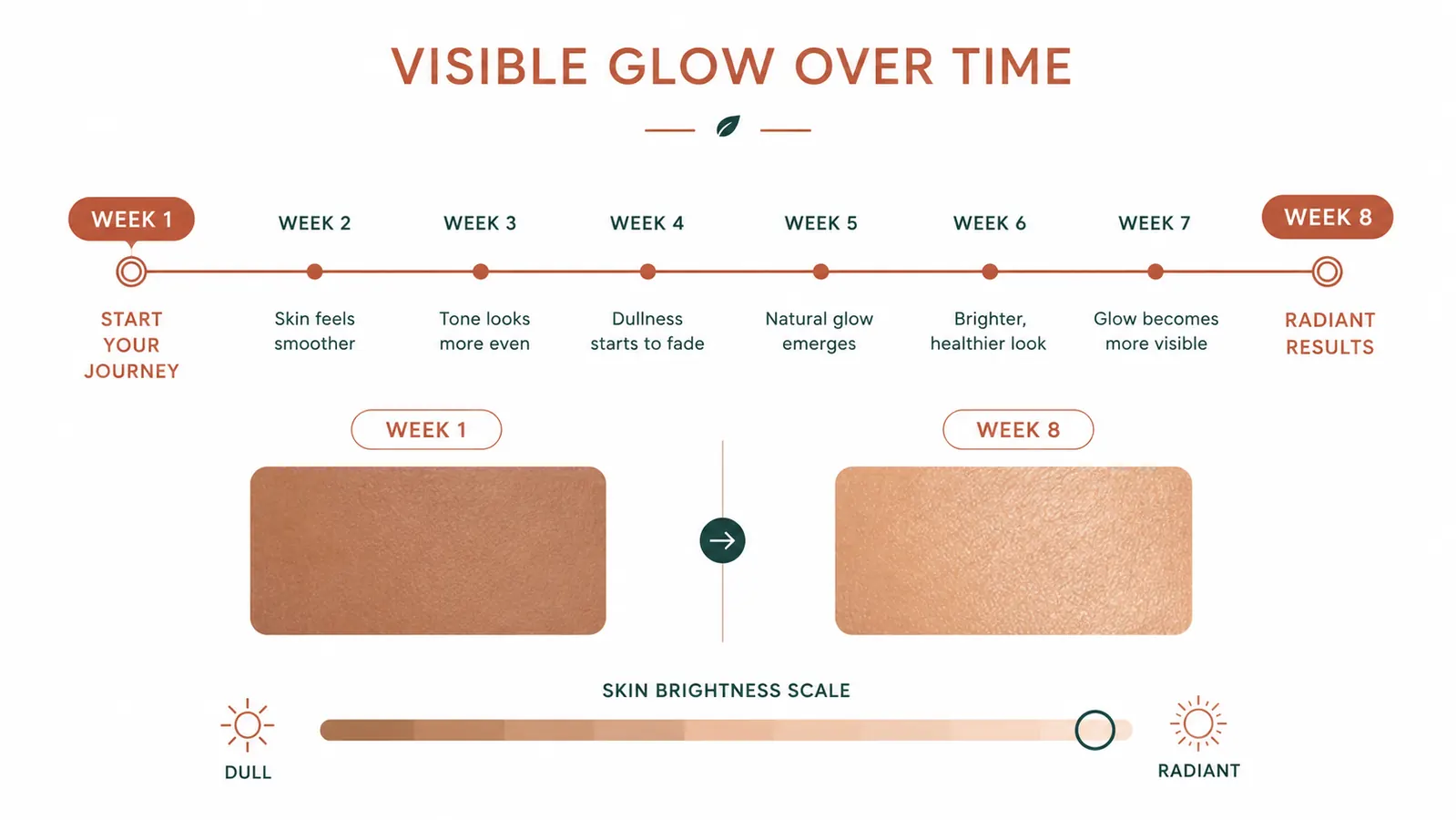
I photographed both of our faces in the same light every two weeks to track evenness and overall brightness. My partner was skeptical about photos but agreed it was the only way to see gradual change objectively, since the mirror lies to you when you see your face every day. By week four, he was the one asking me to compare the photos.
The bottle lasted the full 60 days with about 15% remaining, which tells me the 1 fl oz size is genuinely appropriate for two people sharing the product as a morning routine item. That's a useful data point if you're budgeting for a couple.
What's Actually in This Formula
CeraVe built this serum around 10% L-ascorbic acid, which is the gold-standard form of vitamin C for skin brightness and collagen synthesis. L-ascorbic acid is notoriously unstable: it degrades on contact with light, air, and pH imbalances. Most serums fail at shelf stability, which is why you see so many turn orange within a month of opening. CeraVe's approach here is to add three essential ceramides (ceramide NP, ceramide AP, ceramide EOP) alongside hyaluronic acid to create what the brand calls a "multi-vesicular emulsion." The ceramides don't prevent oxidation directly, but they do support the skin barrier enough that the vitamin C is delivered more effectively and with less irritation.
The pH comes in around 3.5, which is appropriate for L-ascorbic acid activity. At higher pH, the vitamin C becomes less effective. At lower pH, irritation spikes. CeraVe has threaded that needle reasonably well. The texture is a lightweight, slightly viscous serum that spreads easily and absorbs in under 90 seconds on my skin. My partner noted slightly longer absorption on his oilier skin, but no pilling under moisturizer.
One thing I want to name explicitly: the formula does not include ferulic acid, which is the combination made famous by SkinCeuticals C E Ferulic for significantly boosting L-ascorbic acid stability and potency. If you want a full breakdown of how this compares, I've written a detailed piece on CeraVe Vitamin C vs SkinCeuticals C E Ferulic. The short answer: ferulic acid matters, and the absence of it is the main reason this serum exists at a lower price point.
What Changed After 60 Days
By week six, I noticed my left-cheek hyperpigmentation had faded measurably. Not gone, but the two-year-old breakout scar that I'd been covering with concealer was about 30% lighter in the comparison photos. My overall skin tone looked more even in photographs taken without filter or ring light, which I use as my baseline for an honest check. Morning dullness was noticeably reduced: my skin looked awake at 7am in a way it hadn't before I started the serum.
My partner's results were in a different category. He had no hyperpigmentation to address, but his post-shave redness, which sat along his jawline and neck most mornings, was less prominent by week eight. He also commented that his skin looked less "flat" in the afternoon, a word he uses for that midday deadness that people with oily skin often get. I wouldn't call that glow, but it was a real, observable change. Importantly, he had no reaction, no redness, no tingling beyond the first week of application.
By week six I stopped reaching for concealer on most mornings. That's not a dramatic claim. It's just what the skin showed after two months of consistent vitamin C.
The Stability Question: Does It Oxidize?
This is the practical concern with L-ascorbic acid formulas, and it deserves a direct answer. After 60 days, the serum had a faint yellow tint that was not present when I first opened it. That's some oxidation. It did not turn orange, which is the visual cue that a serum has degraded past usability. The smell remained clean throughout, no sour or rancid notes. My operating assumption is that the ceramide-hyaluronic emulsion did slow oxidation somewhat, even if it can't stop it entirely.
I stored the bottle in a cabinet away from direct light and kept the pump cap on between uses. If you leave it on a sunny windowsill or in a warm shower, you'll accelerate degradation. The bottle design does not have the amber glass or completely opaque casing that the best-preserved vitamin C serums use. That's a tradeoff worth naming. If you're a twice-daily user or sharing with a partner like we were, the bottle will go empty before significant degradation. If you use it infrequently, consider keeping it in the refrigerator.
Texture and Feel on Two Skin Types
On my dry-to-combination skin, the serum feels almost like a lightweight gel-serum. It spreads easily across a clean, slightly damp face and there's a faint slip that I associate with the hyaluronic acid. After one minute it's absorbed and I can apply my ceramide moisturizer without any tackiness or pilling. In winter, I sometimes applied a very thin layer of moisturizer first if my skin felt particularly tight, which seemed to buffer any potential sensitivity without killing the serum's effectiveness.
My partner's oily skin experienced slightly different texture dynamics. He found the serum left a minimal residue on his skin that took about two minutes to fully absorb rather than one. Under his oil-free moisturizer this wasn't a problem, but he noted it would be annoying if he was in a rush. He also reduced his application to two pump presses rather than three, which he said felt like the right amount for his skin. No breakouts in 60 days on his side, which matters because some vitamin C formulas aggravate congested or oily skin.
What I Liked
- 10% L-ascorbic acid is clinically active at a meaningful concentration
- Three ceramides support the skin barrier and reduce irritation compared to acid-only formulas
- Noticeably slower oxidation than most L-ascorbic acid serums in the same price range
- Works across skin types without breakouts or prolonged redness on oilier skin
- Lightweight texture absorbs cleanly under moisturizer and SPF
- Large reviewer base of 43,000+ provides real-world confidence across skin types
Where It Falls Short
- No ferulic acid, which limits both stability and potency compared to premium alternatives
- Bottle packaging does not fully protect against light exposure
- Some oxidation visible after 60 days of regular use
- Absorption takes slightly longer on oilier skin types, which may feel inconvenient for morning routines
- Results on hyperpigmentation are gradual, not dramatic, especially for deeper or older marks
How It Fits Into a Shared Morning Routine
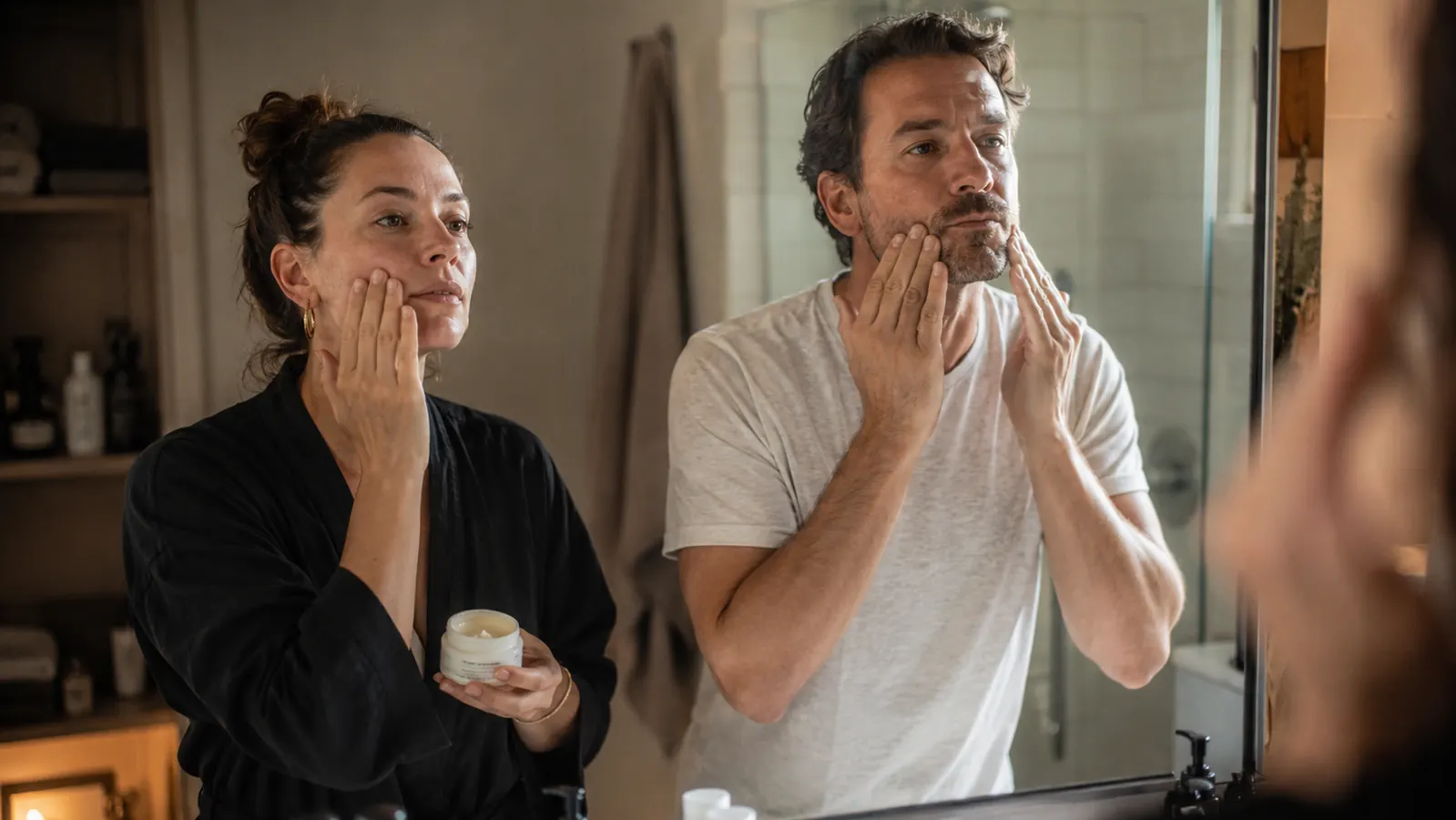
One of the underrated things about this serum is that it works in exactly the same step regardless of whether you're addressing anti-aging, brightening, or post-shave redness. It goes on after cleansing, before moisturizer. There's no complicated layering, no pH-window waiting, no conflict with the ceramide moisturizers that both of us already used. For couples sharing a single skincare step, that simplicity matters. Most mornings we were both done with the serum step in under 90 seconds total. That's the kind of friction-free morning routine that actually gets kept.
If you want to think through how to build the right application sequence, including how long to wait between steps and whether to layer this with a niacinamide or an SPF, I've covered that in detail in my guide on why vitamin C serum belongs in your morning routine. The short version: vitamin C before moisturizer, SPF last, no waiting required with this formula.
Who This Is For
I'd recommend CeraVe Vitamin C Serum to anyone who has wanted to add vitamin C to their routine but has been burned by either oxidation problems or irritation from high-concentration L-ascorbic acid serums. The ceramide-buffered formula makes it more approachable than pure acid serums, and the 10% concentration is real enough to deliver visible brightening and antioxidant protection over consistent use. It's particularly well-suited for couples with different skin types who want a single morning product they can both reach for without customizing their routine. If your main concerns are dullness, mild hyperpigmentation, or sun damage prevention as a complement to SPF, this serum will address all three.
Who Should Skip It
If you're dealing with significant or deep hyperpigmentation, post-inflammatory marks from acne, or melasma, you'll likely need a more potent approach. The 10% L-ascorbic acid without ferulic acid is a baseline formula. It is not the most powerful vitamin C available. Those who are serious about maximizing L-ascorbic acid efficacy and are willing to pay significantly more for it should look at SkinCeuticals C E Ferulic or similar ferulic-stabilized options. Also worth noting: if you're very sensitive to pH-active ingredients, even this gentler formula may cause some initial tingling during the first two weeks of use. That's normal and typically fades, but it's worth knowing going in. Anyone with a known sensitivity to niacinamide should check the full ingredient list before purchasing, as formulations can vary.
Two months, two skin types, one bottle. CeraVe earned its place in our routine.
The 4.5-star rating from over 43,000 reviews lines up with what we saw in our own test: consistent brightening, good barrier compatibility, and no oxidation surprises if you store it properly. It's the vitamin C we've kept buying.
Amazon Check Today's Price on Amazon →