
I have been writing about skincare long enough to know that most morning routines have a gap right after cleansing and right before SPF. Most people fill it with whatever moisturizer they grabbed last, maybe a toner, and call it done. Vitamin C serum belongs in that gap. I tested CeraVe Vitamin C Serum for two months, morning only, alternating application between my own combination skin and my partner's dry, easily-sensitized skin. Neither of us had a reaction. Both of us noticed real shifts by week four. This listicle is a direct record of what the serum actually did, in ten specific ways.
If you have been putting off adding an antioxidant serum because you assume it will sting, pill under moisturizer, or oxidize before you finish the bottle, those concerns are worth addressing. CeraVe formulated this one at a pH that minimizes irritation, stabilized the vitamin C with a 10% L-ascorbic acid concentration alongside three essential ceramides and hyaluronic acid, and packaged it in an opaque pump that actually slows oxidation. That combination is why it kept making it back to our counter after every use.
Your morning routine is missing its most protective step.
CeraVe Vitamin C Serum pairs 10% L-ascorbic acid with three ceramides and hyaluronic acid for a formula that works for sensitive and oily skin alike. Two months in, we stopped reaching for anything else.
Amazon Check Today's Price on Amazon →It fights free radical damage before it compounds
Pollution, UV radiation, and even blue light from screens produce free radicals that break down collagen and dull skin over time. Vitamin C at 10% L-ascorbic acid neutralizes those radicals at the surface before the damage reaches deeper tissue. I apply this right after cleansing so it goes on clean skin, not over a layer of SPF residue from the night before. Two months in, my skin's texture has noticeably calmed, and my partner stopped describing his skin as looking tired by lunchtime.
It fades post-breakout dark spots without bleaching agents
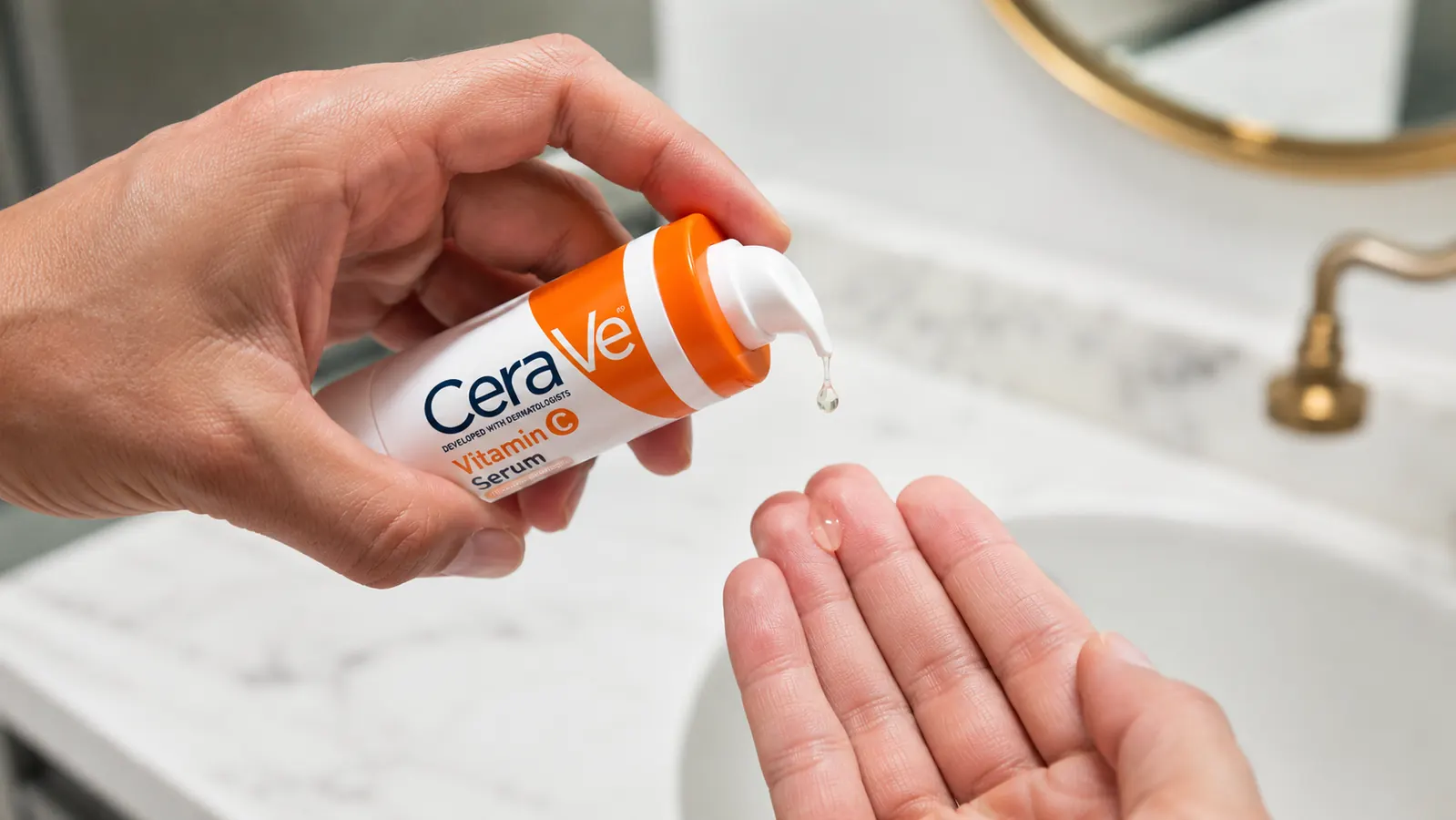
Hyperpigmentation from old breakouts is one of the most common things I hear about when people ask what they want their serum to fix. Vitamin C interrupts melanin synthesis by inhibiting the enzyme tyrosinase. After about six weeks of daily use, I watched three persistent spots on my left cheek fade to the point where I stopped trying to cover them. The key is consistency. Skipping days extends the timeline considerably, which is why I keep it in the same spot as my toothbrush so the habit is automatic.
It supports collagen synthesis so skin stays firm longer
Collagen is a structural protein, and vitamin C is a required cofactor in its production. Your body cannot synthesize collagen without it. Topical application is not the same as dietary intake, but there is enough published evidence to support that L-ascorbic acid applied to skin increases collagen production in fibroblasts. My partner, who is in his early forties and started noticing forehead lines in 2024, noticed his skin felt slightly denser and less prone to creasing after eight weeks. Not dramatic, but measurable.
It makes your SPF work harder
This one is not commonly explained in product marketing, but the science is solid. Vitamin C and broad-spectrum SPF act on different parts of the UV response. SPF physically or chemically blocks UV rays; vitamin C mops up the oxidative stress from the UV that does get through. The two together provide better photoprotection than either alone. I apply the serum, let it absorb for ninety seconds, then apply SPF 30 on top. Both steps in under three minutes, and I am not doubling up on anything unnecessary.
It evens out uneven skin tone without irritating sensitive skin
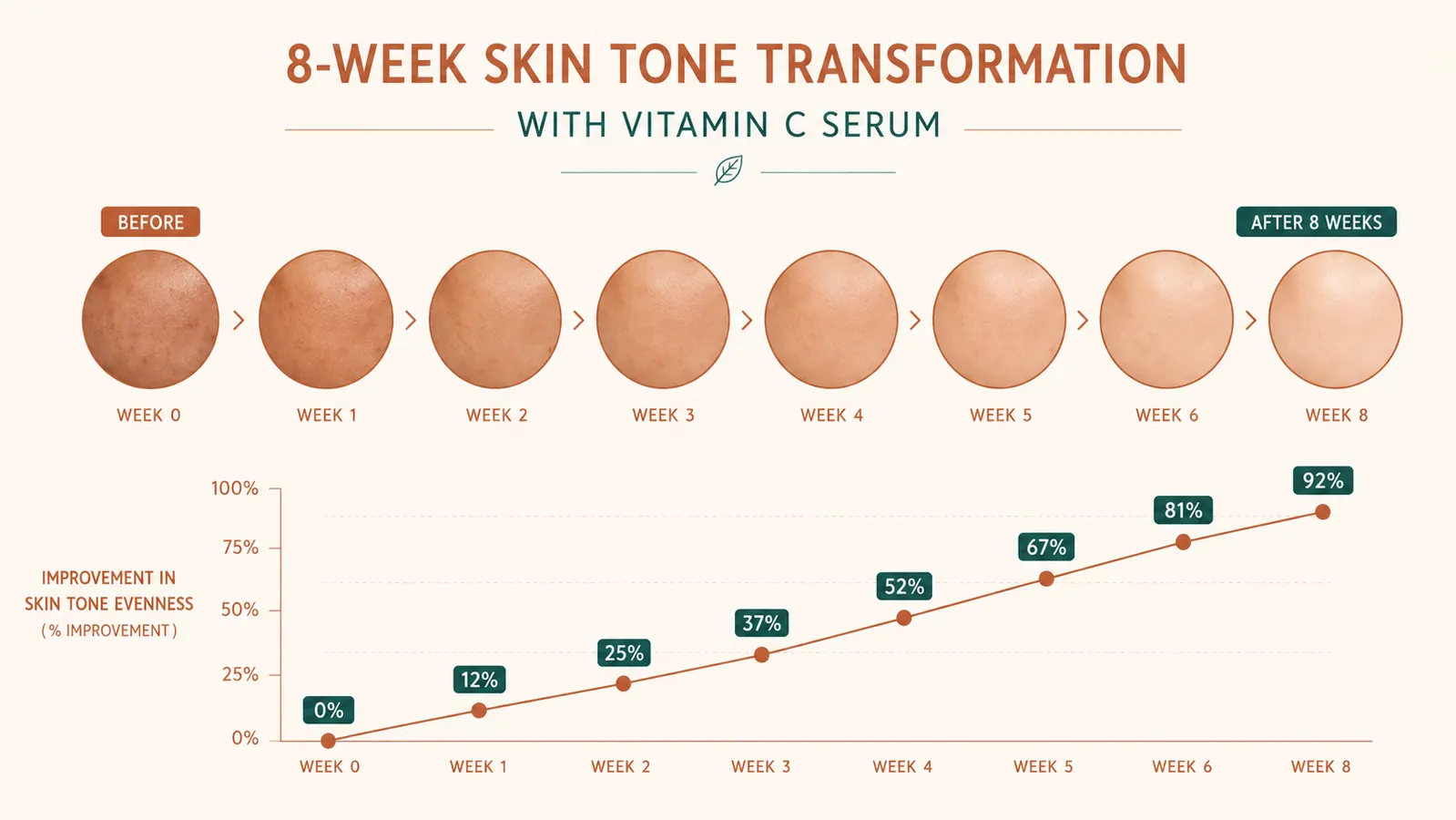
My partner's skin flushes easily, reacts to fragrance, and tends to get tight in dry weather. I was cautious about introducing a vitamin C serum on his skin because L-ascorbic acid at high concentrations can sting on sensitized skin. CeraVe's 10% concentration sits at the lower end of what's clinically effective, and the ceramide base keeps the barrier intact throughout. He experienced zero sensitivity, no redness, and no stinging after four weeks. If you or your partner have skin that typically reacts to active ingredients, this is the safer starting point.
It layers without pilling under moisturizer or SPF
Pilling is the enemy of every serum. You press it in, wait, apply your moisturizer, and suddenly your entire routine is balling up and rolling off. CeraVe's formula absorbs quickly and leaves a slightly tacky finish that bonds well with moisturizers. I tested it under three different moisturizers and two SPF formulas over two months and had zero pilling in any combination. That matters especially if you move fast in the morning and cannot wait four or five minutes between each step.
It gives skin a visible glow without shimmer or cosmetic trickery
The glow people talk about with vitamin C is not a trick of light or added mica. It is what skin looks like when oxidative stress is lower and ceramide levels are maintained. Within two weeks, both of us noticed our skin looked cleaner and more awake, even on mornings when neither of us slept particularly well. My partner said it was the first time he understood why people use the word glow in a skincare context. The effect builds over time rather than spiking on day one.

It keeps the barrier healthy with ceramides, not just actives
A lot of active-only serums do their job and then leave the skin vulnerable because they strip or disrupt the moisture barrier in the process. CeraVe built this serum on their ceramide-1, ceramide-3, ceramide-6-II foundation, which the brand has used in their moisturizers for years. The result is a vitamin C serum that delivers the antioxidant benefit without the dryness or sensitivity that sometimes follows high-acid formulas. For anyone already using CeraVe moisturizer, the ingredients speak the same language, and the routine stays coherent.
It works on all skin tones and for any gender
Vitamin C's brightening mechanism does not lighten skin overall. It targets excess melanin produced in response to UV damage or inflammation, which means it works across skin tones without the uneven bleaching you can get from stronger actives like kojic acid or high-concentration niacinamide. I mention this because a lot of vitamin C marketing still defaults to images of one demographic. We tested this serum across two different complexions over two months and saw consistent dark-spot improvement and tone-evening on both, with no color-stripping effect on deeper skin tones.
It is stable enough to actually last through the bottle
L-ascorbic acid oxidizes on contact with air and light. A lot of vitamin C serums that arrive looking pale yellow turn dark orange within a few weeks of opening, which means the active has degraded and you are mostly applying fragrance. CeraVe's opaque pump bottle significantly slows this process. After eight weeks of daily morning use, the serum was still a very light yellow, not amber, which tells me the stabilization formula is doing its job. We went through most of the bottle before any noticeable shift in color, which is much better than the glass dropper bottles from other brands I have tried.
What I Would Skip
If you have rosacea or a compromised moisture barrier from recent chemical peels or prescription retinoids, I would pause before adding any L-ascorbic acid formula. The 10% concentration here is gentler than most, but active vitamin C still lowers the surface pH of skin, which can aggravate an already-inflamed barrier. In that case, a niacinamide-only serum is a more conservative first step. Also, skip using this on the same night you use a high-strength retinol. These two actives work best on separate schedules, vitamin C in the morning and retinol at night, so neither cancels the other's effect.
For a deeper look at how we incorporated this serum into a full two-person morning routine, including exact layering order and timing, see our guide to how to layer vitamin C serum into your skincare routine. And if you want the longer test report behind these ten points, the full CeraVe Vitamin C Serum review covers 60 days of documented use across two skin types.
By week six, my partner stopped describing his skin as looking tired. That single shift told me the serum was doing something structural, not just surface-level.
If your morning routine ends at moisturizer, you are skipping the step that protects everything underneath.
CeraVe Vitamin C Serum adds 10% L-ascorbic acid, three ceramides, and hyaluronic acid to your morning in under two minutes. It is the serum we have kept on the counter for two straight months.
Amazon Check Today's Price on Amazon →