
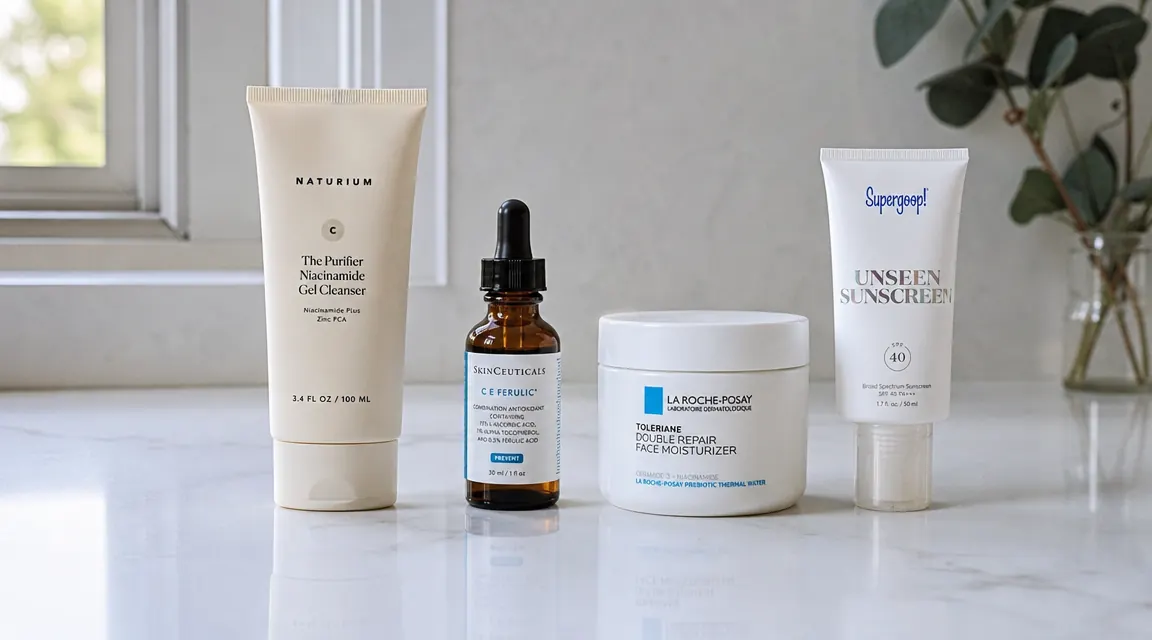
I got vitamin C serum wrong for about two years. I was applying it after my moisturizer, sometimes mixing it with my niacinamide toner, occasionally swapping morning and evening because I ran out of retinol. The serum sat on top of everything, turned orange in the bottle, and I saw basically nothing from it. Once I actually studied the chemistry and rebuilt the routine around when and how to layer a vitamin C serum, the results came in fast. Brighter skin in about three weeks. Fewer of those flat brown patches on my cheekbones by week six. My partner noticed the same lift when he committed to the same sequence. This guide covers exactly what we changed, step by step, so you can skip the trial-and-error phase.
The product I keep coming back to is the CeraVe Vitamin C Serum, which delivers 10% pure ascorbic acid alongside three essential ceramides and hyaluronic acid. At its price point it is one of the harder working bottles you can keep on a bathroom shelf. But even the best vitamin C serum will underperform if your layering sequence is off. So let's fix that.
Not getting results from your vitamin C serum? It might be how you're layering it.
We use the CeraVe Vitamin C Serum as our morning anchor. It's stable, well-formulated, and easy to layer correctly once you know the sequence.
Amazon Check Today's Price on Amazon →Step 1: Start with a Gentle, Low-pH Cleanser
Vitamin C in the form of pure ascorbic acid works best in an acidic environment, ideally around pH 3 to 3.5. Your skin's natural surface pH sits around 4.5 to 5.5 after a good night's rest, which is close enough. The problem comes when you start your morning with a harsh or alkaline cleanser. Anything that strips the skin barrier or pushes your skin pH above 6 will slow down ascorbic acid absorption significantly.
A low-lather, non-stripping face wash is all you need here. If your skin feels tight after cleansing, the cleanser is too alkaline. We use a gentle foaming cleanser that leaves skin feeling clean but comfortable, not squeaky. Pat dry with a clean towel. Do not rub. You want the skin surface calm before you apply any active.
Morning cleansing is optional for some people. If you cleansed the night before and just rinsed with water in the morning, that works fine too. The important thing is that the skin is clean and your hands are clean when you apply the serum. Residue from overnight products can interfere with how the vitamin C serum sits against the skin.
Step 2: Apply Vitamin C Serum to Damp (Not Wet) Skin
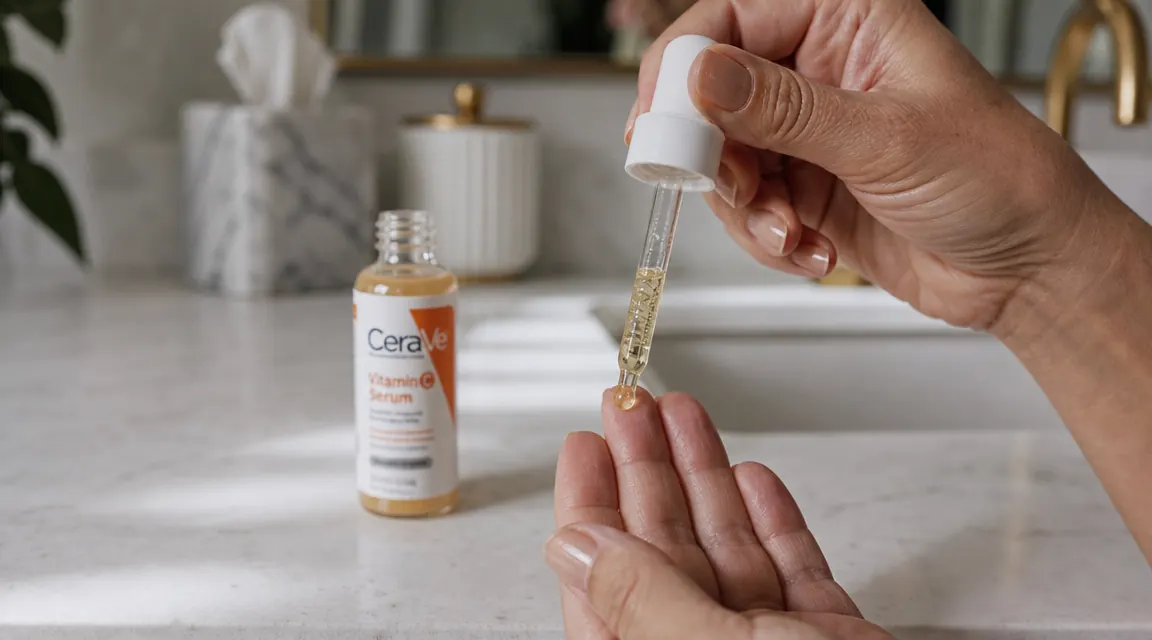
This is the step where most people make the timing mistake. You want the skin slightly damp, not soaking wet and not bone dry. Slightly damp means you patted dry but there's still a faint coolness to the skin. That thin film of water helps the serum spread more evenly and absorb faster. If the skin is completely dry, the serum can sit on top and evaporate before it has a chance to penetrate.
Dispense three to four drops of the CeraVe Vitamin C Serum onto your fingertips. Warm it briefly by pressing your fingertips together, then press it gently into the forehead, cheeks, nose, and chin rather than rubbing or dragging. Pressing the serum in minimizes oxidation from friction and ensures even coverage. Work quickly but don't rush. You have about 20 to 30 seconds before the damp window closes.
My partner applies a slightly larger amount because he has more surface area to cover and somewhat thicker skin. He does a press-and-hold for a few extra seconds on areas where he notices uneven tone. That additional contact time seems to help. Either way, the goal is full face coverage with no pooling around the nose or chin.
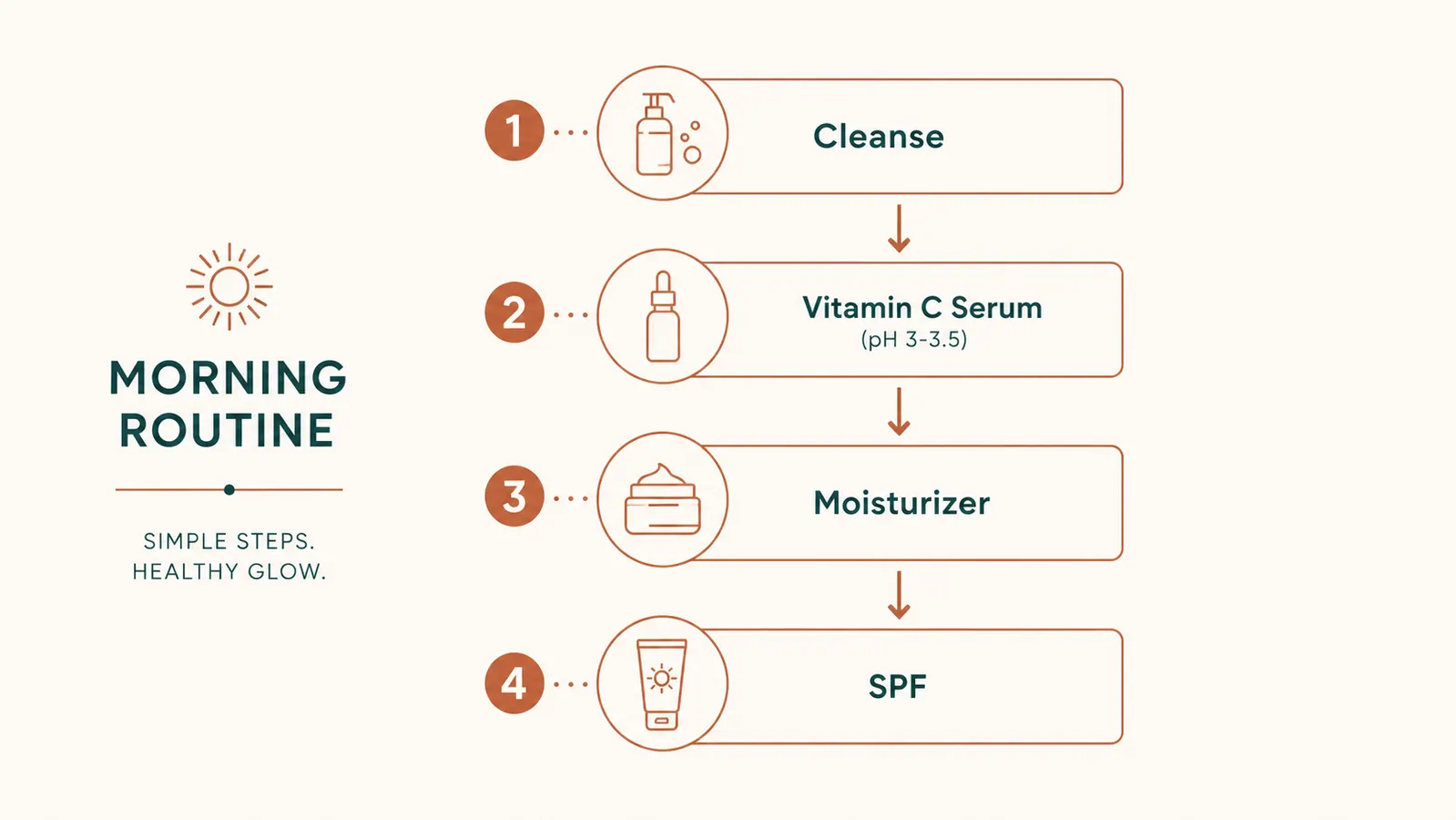
Step 3: Wait Two to Three Minutes Before Moving On
This is the step people skip the most often because it feels like nothing is happening. But ascorbic acid needs a short window to begin absorbing before you layer anything over it. Stacking moisturizer immediately on top of fresh vitamin C serum dilutes the concentration at the skin surface and can raise the local pH, which slows absorption.
Two to three minutes is enough. I use that time to brush my teeth. My partner checks his phone. You do not need to stand in the bathroom watching a timer. Just give it a beat before reaching for the next product. The serum should feel like it has mostly absorbed, meaning no significant wetness or slipperiness when you lightly touch your cheek.
Two minutes of waiting between vitamin C serum and moisturizer made a more visible difference than switching to a pricier serum ever did.

Step 4: Apply Moisturizer to Lock In and Protect
Once the serum has had its absorption window, apply your regular moisturizer. The moisturizer creates a physical barrier that slows water loss and helps the actives already absorbed in the previous step continue working throughout the day. It also buffers the skin before SPF, which some formulas can feel slightly drying if applied directly to bare skin.
Use whatever moisturizer you already like. There is no conflict here. Ceramide-based moisturizers pair particularly well with the CeraVe serum because the serum already contains ceramides, and layering them together reinforces the skin barrier consistently. We both use a fragrance-free lotion that absorbs quickly without leaving a white cast. Apply in upward strokes, let it settle for about a minute, then move to SPF.
Couples with very different skin types can use different moisturizers here without disrupting the sequence. The ordering logic is what matters, not the specific products. A richer cream for dry skin, a lighter lotion for oily or combination skin, both work within this same step structure.
Step 5: Finish with Broad-Spectrum SPF 30 or Higher
Vitamin C is an antioxidant that helps neutralize free radicals triggered by UV exposure. That means it and SPF are not redundant, they are complementary. Vitamin C serum is not a substitute for sunscreen. Without SPF over the top, you are using the vitamin C to fight a battle it cannot win on its own. The ascorbic acid you applied in step two will degrade faster in direct sunlight without a UV filter on top of it.
Apply a nickel-sized amount of SPF over the moisturizer, covering the face, neck, and any exposed ears. If you are using a mineral SPF with zinc oxide or titanium dioxide, apply a slightly more generous layer because mineral filters rely on physical coverage. Chemical SPF can be applied more lightly. Either works. Let the SPF sit for about 30 seconds before you put on makeup or head outside.
My partner resisted the SPF step for almost a year. He felt it made his face feel heavy under his beard. We switched him to a lightweight fluid SPF designed for oily and combination skin, and that solved it. If SPF feels wrong on your skin, it is almost always a formulation problem, not a category problem. There are dozens of options. The right one will feel like nothing.
What Else Helps: Avoiding the Most Common Layering Mistakes
The sequence above is the foundation. A few additional things that make it work better over time. First, avoid mixing vitamin C serum directly with niacinamide in the same application step. These two ingredients are frequently used together with good results, but at high concentrations some formulations develop a flushed yellow tinge from the interaction. If you want both, apply niacinamide products at night and vitamin C serum in the morning. That separation is the easiest way to get full benefit from both.
Second, store the vitamin C serum in a cool, dark place. Ascorbic acid oxidizes when exposed to heat and light. The CeraVe serum comes in a pump bottle with an airless mechanism that slows oxidation, which is part of why I keep recommending it. But any vitamin C serum will degrade faster if it sits on a sunny windowsill or in a steamy shower. A bathroom drawer or medicine cabinet is fine. A refrigerator is even better if you live somewhere warm.
Third, consistency matters more than frequency. Using the vitamin C serum five mornings out of seven for three months will outperform using it daily for two weeks and then stopping. We track this informally just by keeping the bottle next to the sink. If we see the level dropping at a reasonable pace, we're both being consistent. If the bottle barely moves, one of us has fallen off. That visual cue helps.
If you want a deeper look at how the CeraVe formulation compares to higher-end alternatives, we have a full breakdown in our CeraVe vs SkinCeuticals comparison. And if you want to understand the full 60-day arc of what consistent use actually looks like on two different skin types, the long-term review covers that in detail.
Ready to start the sequence? The serum that anchors this routine is worth having in your cabinet.
CeraVe Vitamin C Serum with 10% pure ascorbic acid, three ceramides, and hyaluronic acid. Stable formula, airless pump, no fragrance. It works when you use it correctly, and now you know how.
Amazon Check Today's Price on Amazon →