
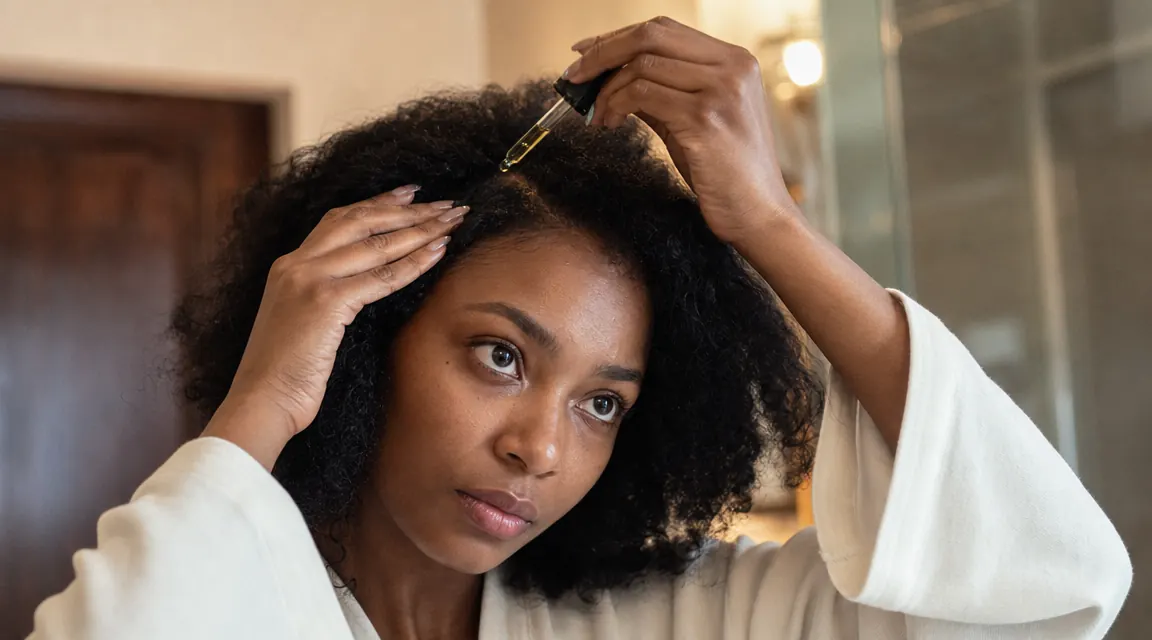
My partner and I have both dealt with scalp issues. His problem is a dry, flaky scalp that gets worse in winter. Mine is the opposite: fine hair that thins near my temples when I am stressed or not sleeping well. We landed on the same solution from different directions: rosemary oil. But the first few weeks, neither of us got results because we were applying it wrong. Too much product, wrong timing, no massage, rinsed out too soon. Rosemary oil is not difficult to use, but there is a right way and a wrong way, and the difference shows up in your hair.
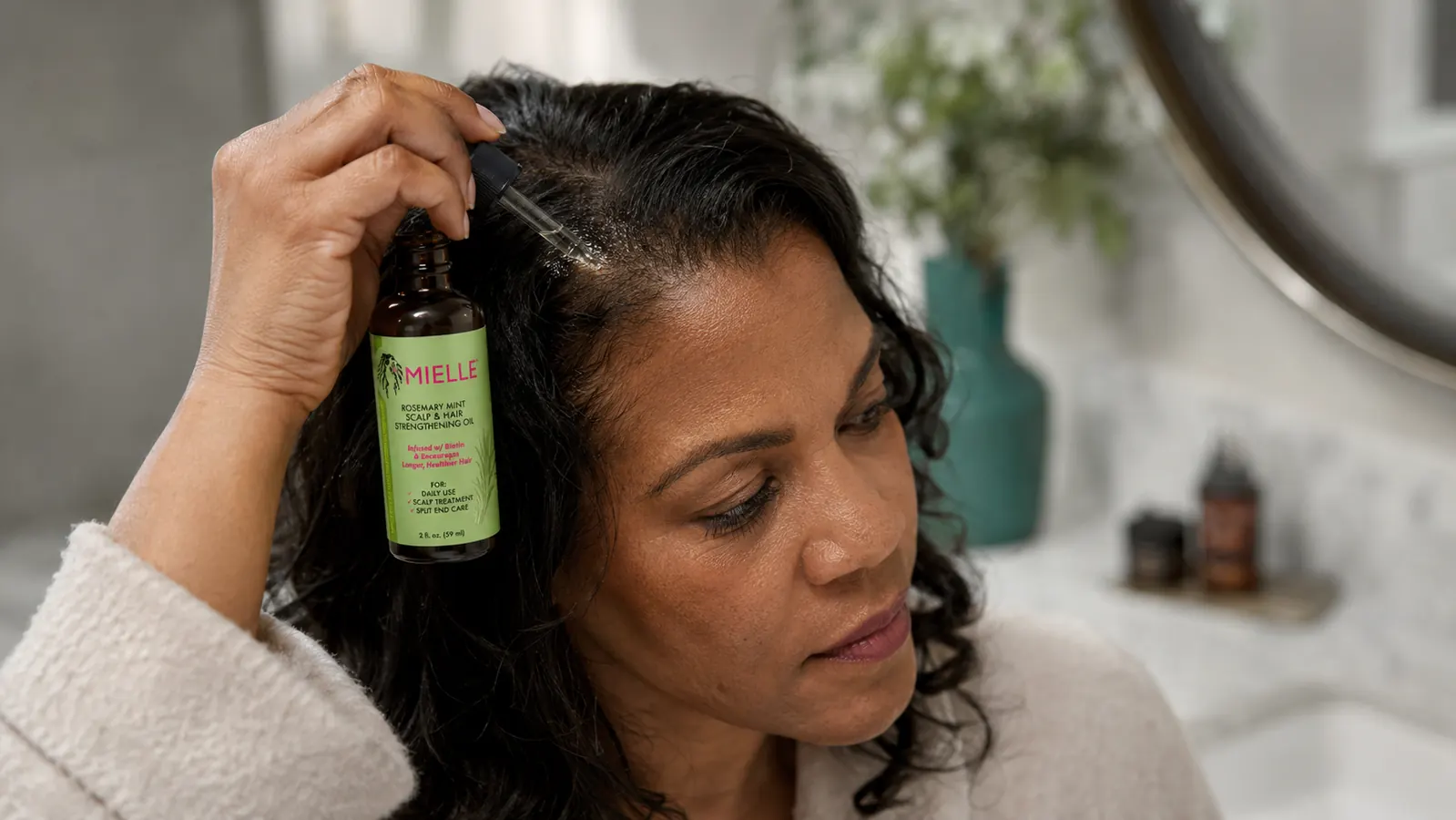
The product we settled on after testing several options is Mielle Organics Rosemary Mint Scalp and Hair Strengthening Oil with Biotin. It has 122,000-plus reviews on Amazon, a 4.5-star average, and a formula that adds biotin and mint to the rosemary oil base. The mint gives a noticeable cooling sensation that helps you feel where the oil is actually landing. That matters more than it sounds when you are trying to apply product accurately to your scalp through hair.
If your scalp feels dry, itchy, or your shedding has picked up, this is the place to start.
Mielle Organics Rosemary Mint Scalp Oil has over 122,000 reviews on Amazon and is one of the most consistently repurchased hair oils in this price range. Check current availability and pricing before you read on.
Amazon Check Today's Price on Amazon →Step 1: Section Your Hair Before You Apply Anything
The single biggest mistake people make with rosemary oil is applying it to the surface of their hair rather than to the scalp itself. If you pour oil onto the top of your head without parting, most of it coats your strands and makes them greasy. None of it reaches the follicle, where the work actually happens.
Use a rat-tail comb or your fingernail to create a clean part, and work section by section. I do four sections: a middle part from forehead to nape, then a horizontal part from ear to ear. That gives me four quadrants to work through. My partner, who has a shorter cut, does two sections. However you divide your hair, the goal is the same: exposed scalp that you can reach with the dropper tip or your fingertip.
For anyone with a buzz cut or very short hair, sectioning is less critical, but pressing the oil directly onto the scalp with your fingertip is still better than rubbing it across the top of the hair. Contact with skin, not fiber, is what you are after.
Step 2: Use the Right Amount -- Not More
With rosemary oil, more is not better. For a full-head application, I use about six to eight drops of Mielle Rosemary Mint Oil total. My partner, treating just his dry crown and temples, uses four drops. If your scalp feels greasy or your hair looks weighed down after applying, you are using too much.
The Mielle bottle has a small opening that releases oil slowly, which actually helps with portion control. Tip the bottle upside down and let single drops fall along each parted section rather than pouring a stream. This keeps the product on your scalp and distributes it more evenly than trying to spread a large amount after the fact.
If you have particularly dry or damaged hair ends, you can run whatever oil remains on your fingertips down the lengths after the scalp application. That is a secondary use, not the primary one. The scalp is the target. The rest of your hair benefits incidentally.
Step 3: Massage for at Least Four Minutes
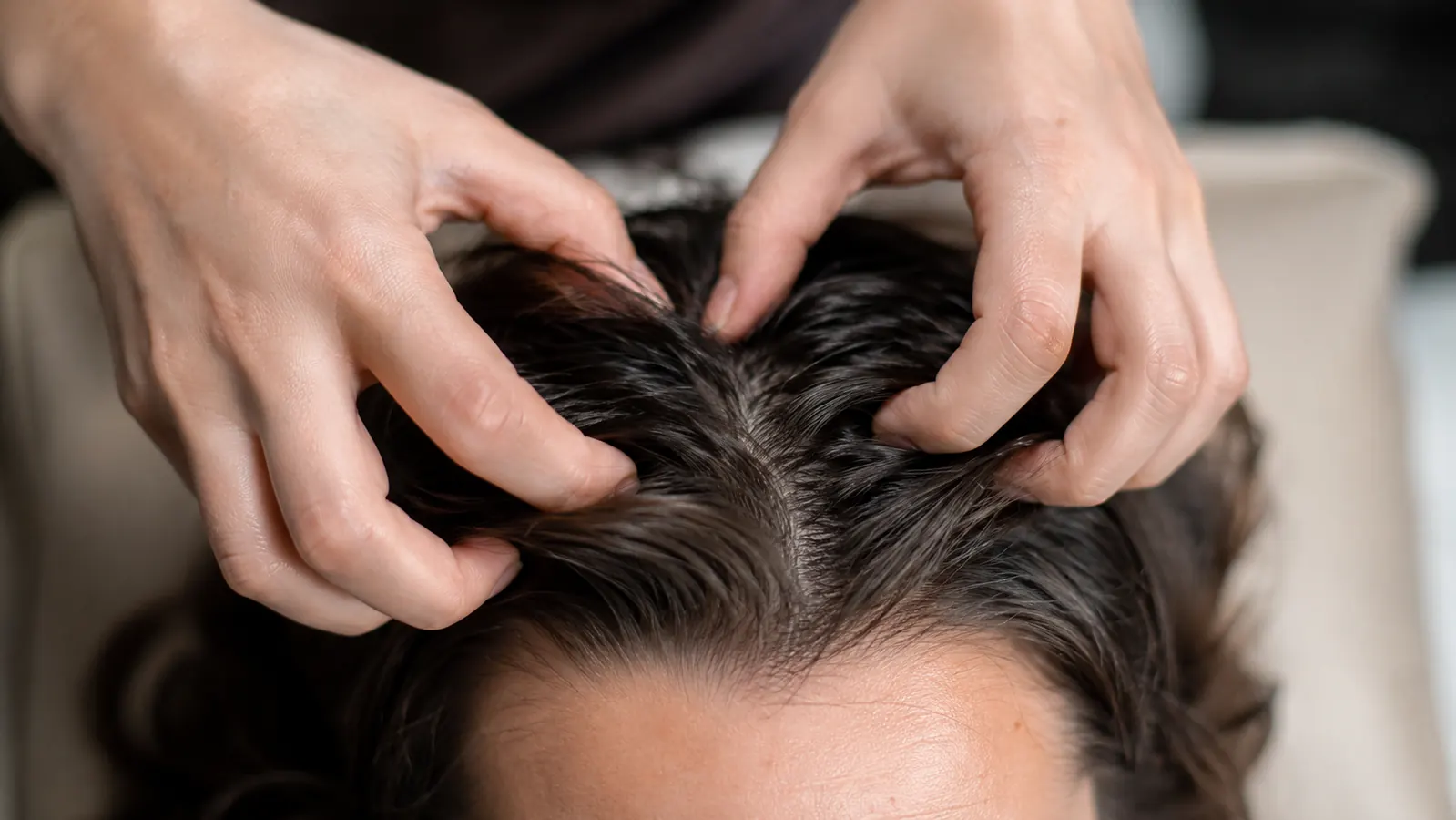
Applying rosemary oil without massaging it in is roughly equivalent to applying sunscreen and immediately wiping it off. The massage step serves two purposes: it presses the oil into the scalp so it absorbs rather than sitting on the surface, and it stimulates blood circulation in the follicle, which is one of the primary mechanisms behind rosemary oil's benefit to hair health.
Use the pads of your fingertips, not your fingernails. Work in small circular motions, about the size of a quarter. Start at the nape of the neck and work forward toward the hairline. Spend extra time on whatever area concerns you most: temples for hairline recession, crown for diffuse thinning, nape for edges. Set a timer if you need to. Four minutes feels longer than you expect when you are standing at a sink, but your scalp will feel noticeably warmer and more relaxed by the end.
The massage step matters as much as the oil itself. Four minutes of circulation-boosting scalp work is not optional -- it is half the protocol.

Step 4: Let It Sit -- Know Your Timing Options
After massaging, you need to leave the oil in contact with your scalp long enough to absorb. The two main approaches are a short pre-wash treatment and an overnight treatment. Each works differently.
For a pre-wash treatment, apply the oil thirty to sixty minutes before shampooing. This is what I do on wash days. The oil penetrates, the scalp benefits, and the shampoo removes most of the residue so your hair does not feel heavy afterward. This approach works for anyone who dislikes leaving oil in their hair for extended periods.
For an overnight treatment, apply the oil before bed and shampoo in the morning. My partner prefers this method because the longer contact time seems to reduce his dry scalp flaking more quickly than short treatments. The tradeoff is that you will want to sleep on a dark pillowcase or put a towel over your pillow for the first few uses while you figure out how much oil you need. With Mielle's formula, we found that four drops overnight leaves almost no residue on the pillow by morning.
A third option, which works well for people with fine hair or oily scalps, is daily micro-dosing: two drops applied directly to dry trouble spots with no full-head application, massaged in for two minutes, left in all day. This is what I do on non-wash days when I notice more shedding or scalp tension.
Step 5: Wash Out Correctly and Track Your Results
When it is time to remove the oil, apply your shampoo directly to dry or slightly damp hair before adding water. Dry hair picks up shampoo far more efficiently than wet hair, and this step makes it much easier to fully emulsify the oil. Work the shampoo through your scalp for about a minute, then add water and rinse. For most hair types, one shampoo is enough. If your hair still feels coated, do a second pass focused on the scalp only.
For tracking results, the most honest metric is shedding count. Run your fingers through your hair after showering and count the hairs that come away. Do this the same way each time: same post-shower timing, same number of passes. Write it down. Rosemary oil benefits typically appear over weeks, not days, and having an actual number prevents the natural human tendency to decide the product is or is not working based on a single good or bad hair day.
We noticed measurable change around the six-week mark. My partner's dry scalp flaking dropped off by the third week, which was earlier than either of us expected. My temples looked a little thicker at about week eight. Neither of those timelines is a guarantee, but they give you a realistic window to evaluate.
What Else Helps: What to Mix With Rosemary Oil
Mielle Rosemary Mint Oil already contains biotin and mint oil alongside the rosemary, so it is formulated as a complete scalp treatment rather than a pure essential oil that requires dilution. However, if you want to stretch the bottle or address specific concerns, there are a few combinations worth knowing.
Mixing two drops of the Mielle oil into a tablespoon of jojoba oil creates a lighter, more spreadable treatment that works well for people with fine hair who find the straight formula too rich. Jojoba oil closely mimics the scalp's natural sebum and absorbs without leaving a heavy coating.
Adding the oil to your conditioner for a single use every few weeks is a simple way to treat your scalp during a routine you are already doing. Add four drops to a palmful of conditioner, apply to the scalp and lengths, leave in for five minutes, rinse. This is not as effective as a dedicated scalp treatment, but it is better than nothing for people who want minimal extra steps.
What does not work well: mixing rosemary oil with retinol-based scalp products, which can increase irritation. If you use a medicated scalp treatment for dandruff or a DHT-blocking serum, keep those applications at least an hour apart from your rosemary oil routine. The products can still coexist in your week, they just should not be layered on the same spot at the same time.
For a deeper look at how Mielle Rosemary Mint Oil compares against another popular scalp serum on the market, read our head-to-head comparison of Mielle vs PURA D'OR Scalp Serum. And if you want the long-term results picture rather than the how-to, our four-month review of Mielle Rosemary Oil covers what we actually saw across two different hair types.
Four minutes of massage, the right amount of product, and six weeks of consistency. That is the protocol.
Mielle Organics Rosemary Mint Scalp Oil is the product we use for this routine. Over 122,000 Amazon reviews and a formula that includes biotin and mint alongside the rosemary for better absorption signal and scalp cooling. Check current pricing to see if it fits your budget.
Amazon Check Today's Price on Amazon →