
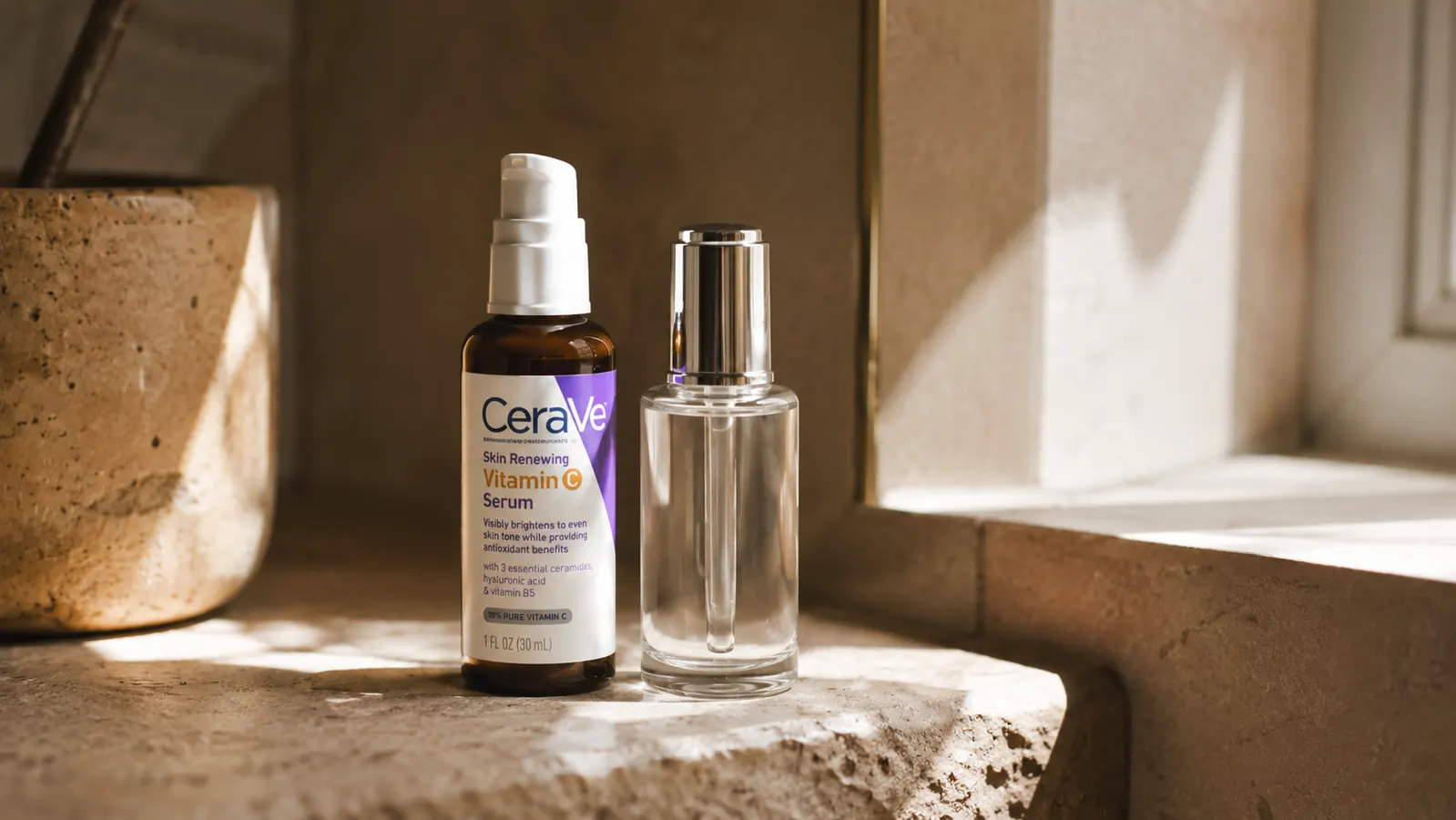
My partner and I spent about three years cycling through premium vitamin C serums. Not because we loved any of them, but because we kept reading that L-ascorbic acid was the only form that actually worked and that you had to spend real money to get a stable formula. We had a $90 ferulic acid serum that we rationed like it was going out of production. We had a $67 version that oxidized inside of six weeks and smelled like old citrus peel by the end. We argued about keeping them refrigerated. We paid for the prestige, and what we mostly got was anxiety about whether our serum was still good. Switching to CeraVe Vitamin C Serum was equal parts practical decision and mild defeat. What I didn't expect was that six months later we'd still be on it with zero interest in going back.
This review isn't going to tell you CeraVe is better than the serums at triple the price. In some specific ways it isn't. What it's going to tell you is the honest accounting: where CeraVe falls short, where it punches above its bracket, which skin types will feel the gap most, and the one situation where I'd still point someone toward a premium option without hesitation. Most reviews on this product either oversell it or undersell it. I want to give you the version that actually helps you decide.
The Quick Verdict
The ceramide-buffered formula closes most of the practical gap with pricier vitamin C serums, with the key exception of stability for infrequent users and potency ceiling for serious hyperpigmentation. For daily use on two people, it's a smarter buy than anything in the $70-plus category.
Amazon Check Today's Price →If a premium vitamin C serum is sitting in your cabinet half-used because you're rationing it, that's the exact problem CeraVe solves.
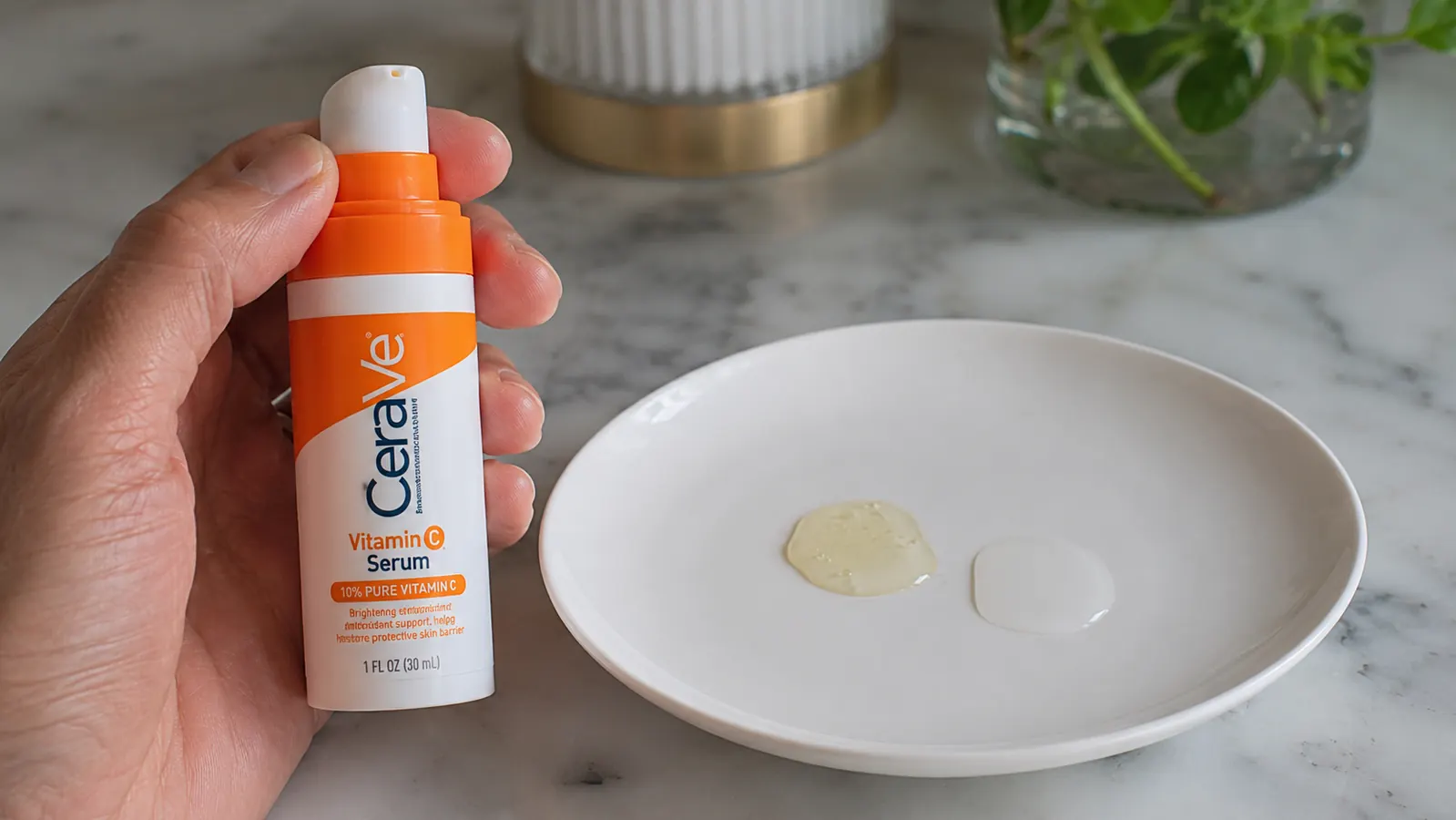
CeraVe's formula puts 10% L-ascorbic acid in a ceramide-hyaluronic emulsion that absorbs cleanly, causes less irritation than most acid-forward vitamin C options, and won't make you wince when you reach the last few pumps. Over 43,000 reviews back this up across every skin type.
Amazon Check Today's Price on Amazon →How I've Used It: What We Switched From and Why It Matters
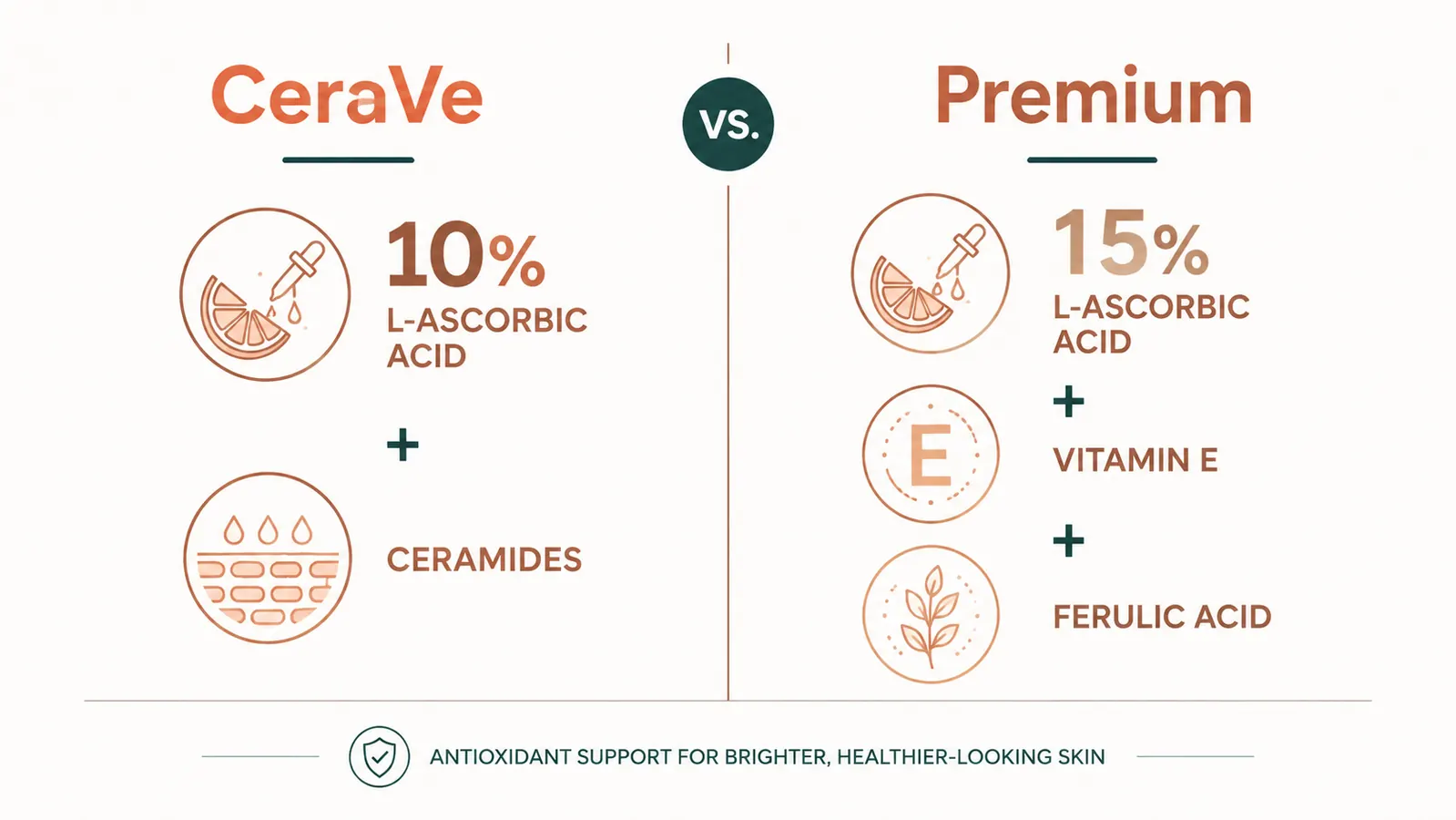
Context matters here, so I'll be specific. The premium serum we were using most recently before switching was a 15% L-ascorbic acid formula with 0.5% ferulic acid and 1% vitamin E. That combination, which SkinCeuticals made famous, is the gold standard for oxidative stability and potency. The formula we had was from a mid-range brand doing a close approximation at a lower price point than SkinCeuticals but still significantly higher than CeraVe. It worked. I'm not going to pretend it didn't. My skin was brighter on it, and the ferulic acid synergy genuinely extended the shelf life past what I'd gotten from non-ferulic serums.
We switched because that serum was creating friction we didn't want in a morning routine. My partner had consistent redness for the first 20 minutes after applying it, which at 15% concentration and a lower pH than CeraVe, was predictable but annoying. I was using it every morning and felt like I was constantly babysitting the bottle, storing it away from any heat or light source, checking its color every few weeks. We were also going through it quickly enough that the economics started to sting. Switching to CeraVe was an experiment. The question was how much we'd actually notice the difference in our skin.
I tracked both of our faces week by week for the first two months, comparing to photos taken during the premium serum period. My partner's skin showed no regression on his primary concern, which was post-shave redness and overall morning dullness. My hyperpigmentation on my left cheekbone continued to fade more slowly than it had on the higher-concentration formula, but it did continue to fade rather than stall. That was the key result that made us stay.
What CeraVe Actually Gets Wrong
I want to address this directly because most CeraVe Vitamin C reviews either ignore the real weaknesses or bury them under so many qualifications that they lose meaning. Here are the three genuine tradeoffs, stated plainly.
First, no ferulic acid. This is not a minor omission. Ferulic acid does two important things in a vitamin C serum: it acts as an antioxidant synergist that roughly doubles the photo-protective benefit of L-ascorbic acid, and it significantly slows oxidative degradation of the formula. CeraVe's ceramide complex partially compensates for the second function by creating an emulsion that seems to buffer the vitamin C against rapid deterioration, but it does not replicate ferulic acid's activity. If you're using vitamin C primarily for sun damage prevention and you use SPF conscientiously, this gap matters less. If you're relying on the serum to replace or reduce your SPF reliance, the gap is meaningful.
Second, the concentration ceiling. Ten percent L-ascorbic acid is the lower bound of clinical efficacy. Studies showing visible brightness improvements typically use between 10% and 20%. CeraVe is at the floor of that range. For most people with mild dullness or uneven skin tone, 10% is sufficient. For anyone treating significant post-inflammatory hyperpigmentation, sun damage patterns, or melasma, 10% will work slowly and may leave you wanting more. The premium serums at 15% or 20% are doing meaningfully more work on those conditions. That's not marketing. It's chemistry.
Third, and this is the one I see glossed over most: the packaging. CeraVe puts this serum in a standard pump bottle that is not opaque enough to fully block light exposure. L-ascorbic acid degrades fastest under UV and visible light. The bottle sitting on a windowsill or even a well-lit bathroom shelf is going to age faster than one stored in a UV-protected amber glass container. For anyone who uses the serum daily and finishes it within 4 to 6 weeks, this is a non-issue. For occasional users who might have the same bottle for three months, it's a real risk.
What CeraVe Gets Right That the Premium Options Missed
The ceramide triple complex is the formula decision that changes how this serum behaves on the skin. Ceramides NP, AP, and EOP are the same lipids that make up the skin's natural barrier matrix. Adding them to an L-ascorbic acid serum does something that pure acid formulas don't do: it keeps the barrier intact during the pH-active delivery window. That's why my partner, who reacted to our previous 15% formula with 20 minutes of redness, applies this one with no visible reaction at all. The ceramides aren't canceling the vitamin C's activity. They're just keeping the skin calm enough to absorb it without protest.
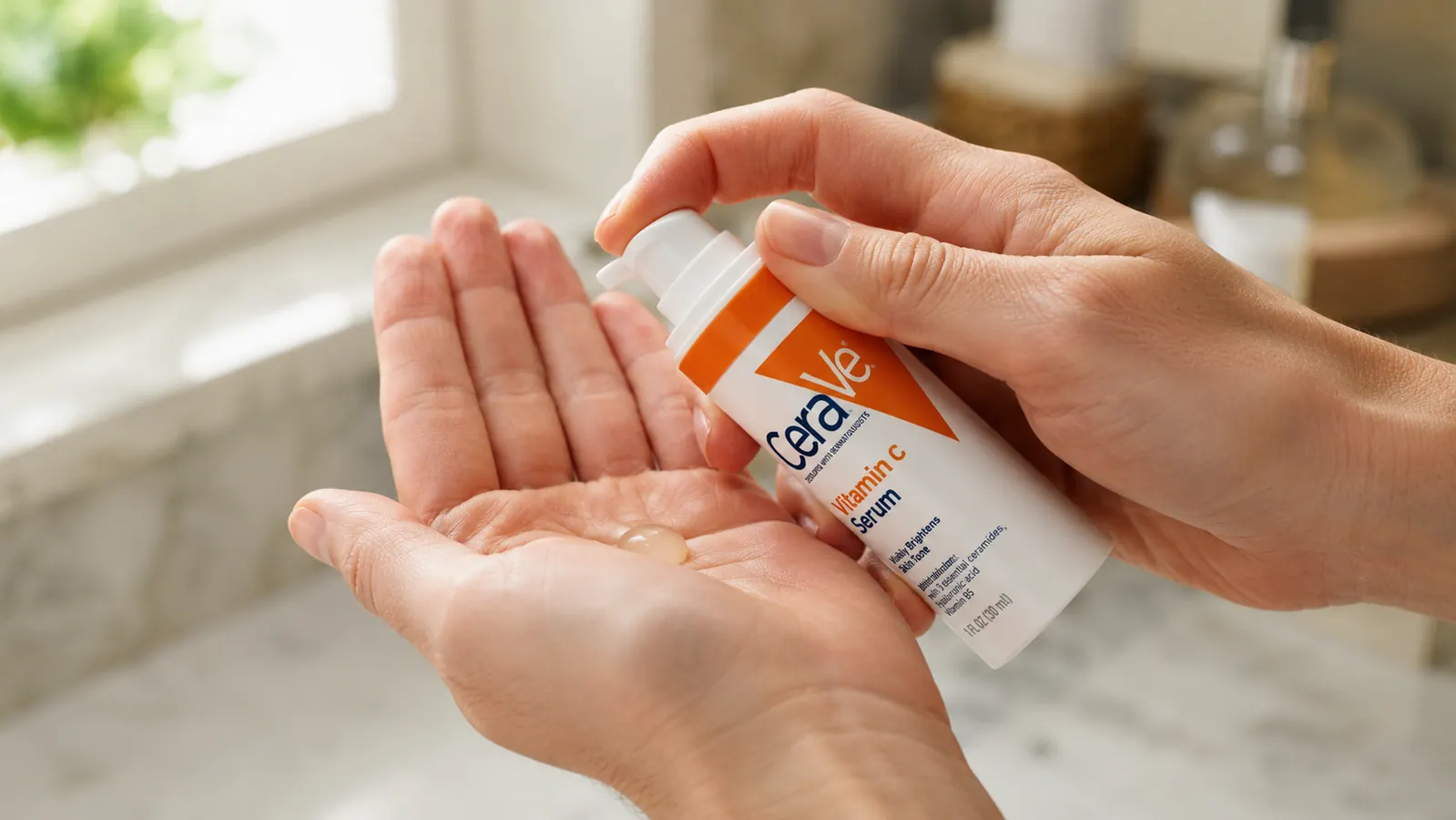
The hyaluronic acid also earns its place here. On dry skin in the winter months, pure L-ascorbic acid serums at low pH can feel stripping, especially if your skin barrier is already compromised by weather or over-exfoliation. CeraVe's formula applies with a faint slip and leaves skin feeling hydrated rather than tight. That matters at 6:30 in the morning when neither of us is in the mood for a complicated layering sequence. The serum absorbs and that's it. Moisturizer goes on without any pilling or tackiness.
The other thing nobody tells you is that the large reviewer base of 43,000 people provides a kind of real-world validation across skin types that you simply don't get with niche premium serums. When you're trying to decide if a formula will work on oily skin, reactive skin, male skin post-shave, or darker skin tones dealing with hyperpigmentation, the volume of honest reviews at all these use cases is genuinely useful signal. The premium serum I'd been using had a fraction of that feedback, which meant I was taking more on faith.
The ceramide formula isn't a consolation prize for people who can't afford ferulic acid. It's a different engineering approach to the same problem, and for two people sharing a morning routine, it works better in practice than the serum we replaced.
The Skin Type Breakdown: Who Notices the Tradeoffs Most
Dry, combination, or sensitive skin: CeraVe is almost certainly the better practical choice over a ferulic acid serum at any price. The ceramide buffering substantially reduces the risk of irritation, tightness, or barrier disruption. If you've tried vitamin C before and gotten redness, tingling that lasted beyond a few minutes, or texture issues under moisturizer, this formula is worth revisiting. My partner is the proof case here. He had written off L-ascorbic acid serums entirely after a bad experience, and CeraVe is the first one he's used without complaint for six months running.
Oily or acne-prone skin: mostly fine, with one flag. The hyaluronic acid in this formula is a low molecular weight variant that is unlikely to cause congestion on its own, but the overall texture is slightly more occlusive than a pure water-based serum. A small number of people with significantly congested skin report that it feels heavier than they want in a morning routine. If you run very oily and already feel like your skin is congested, test it for a week before committing.
Darker skin tones with hyperpigmentation or post-inflammatory marks: CeraVe will help, but you should have calibrated expectations about timeline. The 10% concentration will produce visible improvement over consistent use across three to five months. If your marks are significant, deep, or you are working with a dermatologist on a treatment plan, you may need the potency of a higher-concentration serum or a prescription-level approach alongside vitamin C. CeraVe is a solid maintenance and brightening tool, not a corrective one.
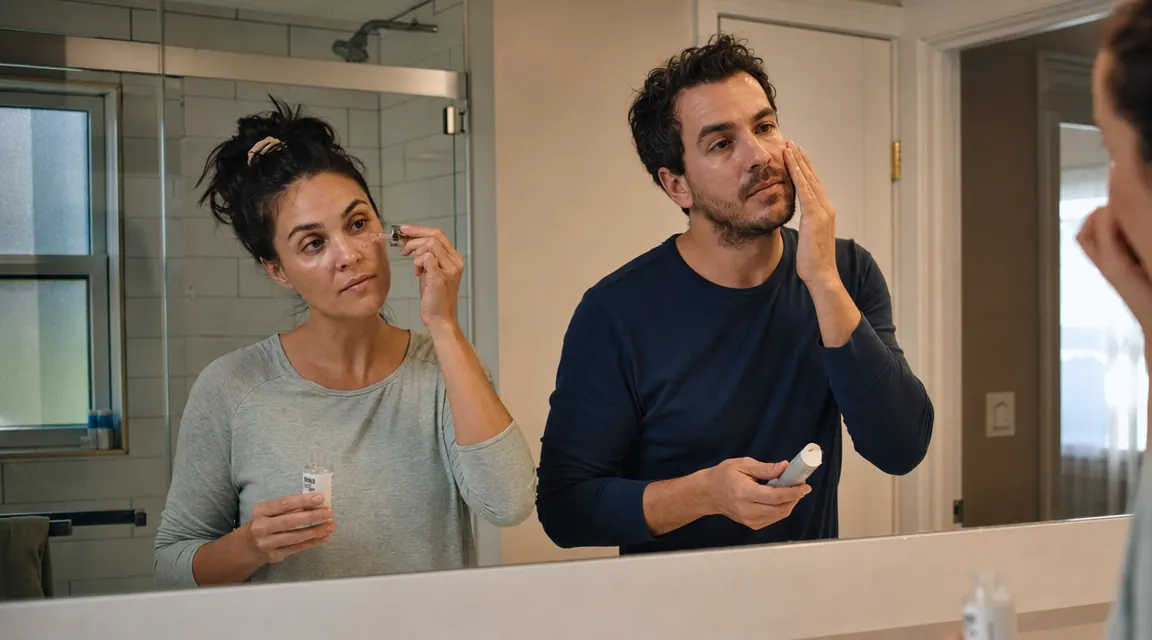
Couples sharing one product across different skin types: this is where CeraVe has a genuine advantage that premium serums don't. Most ferulic acid formulas are formulated aggressively enough that one partner may tolerate them well and the other won't. CeraVe's tolerability profile is wide enough that we've never had to maintain separate vitamin C serums in a shared bathroom, and that single-product simplicity is undervalued when you're managing a routine for two people.
The One Situation Where I'd Still Recommend Spending More
If you use vitamin C serum fewer than three times per week, spend more money and get the ferulic acid version. I know that sounds counterintuitive, but the economics of oxidation work against CeraVe in this scenario. The premium ferulic acid serums degrade meaningfully more slowly because ferulic acid extends the shelf-stable window of L-ascorbic acid. If you're not finishing the bottle within six weeks, that stability difference actually matters. CeraVe's ceramide emulsion helps, but it is not ferulic acid and it does not extend shelf life to the same degree. For infrequent users, a smaller bottle of a better-stabilized formula at a higher price per ounce can actually be more cost-effective than a larger bottle of CeraVe that's past its peak by the time you get to the bottom.
For daily users, couples, or anyone who will finish the bottle within four to five weeks consistently, this caveat doesn't apply. You'll be through the serum long before oxidation becomes a meaningful problem, which is exactly how we've used it and why we've stayed on it.
What I Liked
- Ceramide triple complex reduces irritation compared to pure acid formulas, making it tolerable for reactive and post-shave skin
- Hyaluronic acid adds hydration during application, ideal for dry or combination skin in morning routines
- Wide tolerability profile means one bottle works across two different skin types without customization
- Strong reviewer base of 43,000 plus provides honest real-world validation across skin types and demographics
- Visibly slows oxidation compared to most L-ascorbic acid serums in its category through the ceramide emulsion
- No significant redness or prolonged tingling even on sensitive or reactive skin when used as directed
Where It Falls Short
- No ferulic acid means lower antioxidant synergy and reduced stability versus the premium ferulic acid standard
- 10% L-ascorbic acid is at the lower bound of clinical efficacy, insufficient for significant or deep hyperpigmentation
- Packaging is not adequately opaque to prevent light-induced degradation for infrequent users
- Slightly heavier texture than a pure water-based serum, which may not suit significantly congested or very oily skin
- Brightening results on older hyperpigmentation marks are noticeably slower than higher-concentration alternatives
How This Fits Against the CeraVe Lineup
Something worth naming for anyone who's already a CeraVe household: this serum is meant to sit in your morning routine, after cleanser, before your CeraVe moisturizer. The ceramide system in the serum is designed to work with CeraVe's moisturizers because both products share the same essential ceramide identifiers. That's not a gimmick. Using ceramide-containing products in sequence is a legitimate approach to maintaining barrier function while delivering active ingredients. If you already use CeraVe AM or CeraVe Facial Moisturizing Lotion, this serum slots into your existing routine without any formulation conflicts. That's a real convenience that the premium vitamin C serums at other brands don't offer.
If you want a more detailed picture of how this serum sits against a dedicated ferulic acid option on price, ingredients, and results, I put together a full breakdown in the CeraVe Vitamin C vs SkinCeuticals C E Ferulic comparison. That piece gets into the molecular stability data and gives a recommendation by skin type. The short version is here: if you're daily, start with CeraVe. If you're a committed once-a-week user with specific pigmentation targets, the premium route has a case.
Who This Is For
CeraVe Vitamin C Serum is the right call for daily users, couples sharing a morning product, anyone with sensitive or reactive skin who has been burned by high-concentration acid serums, and anyone who wants visible brightening and antioxidant protection without a complicated or expensive routine. If your goal is general brightening, protection against environmental oxidative stress, and mild hyperpigmentation fading over time, this formula delivers on all three. It's also the most practical vitamin C serum I've found for male skin in a post-shave context, because the ceramide buffer handles the momentary vulnerability of freshly shaved skin without causing the redness that pure acid formulas reliably trigger. For a couple sharing a bathroom, that broad compatibility is worth more than any ingredient claim on the box.
Who Should Skip It
Infrequent users who will take more than six weeks to finish a bottle should look at a ferulic acid-stabilized option stored in proper packaging. People targeting moderate to significant hyperpigmentation with urgency should look at a higher-concentration formula, ideally in the 15% to 20% range with ferulic acid synergy, or should consult a dermatologist about combining prescription-strength actives with a vitamin C step. Anyone with a known sensitivity to ceramide or hyaluronic acid ingredients should check the full formulation list before purchasing, though these reactions are uncommon. Beyond those situations, the main reason to spend more is if the extra potency is directly addressing a specific skin concern that 10% is visibly failing to move after four months of consistent use.
Six months in and we've repurchased three times. The serum we'd spent years rationing is still in the cabinet, empty.
CeraVe's 4.5-star rating from 43,000 reviewers reflects a formula that works across skin types, plays well with ceramide moisturizers, and solves the irritation and rationing problems that plague most vitamin C serums. It's the practical answer to a category that routinely overcharges for marginal gains.
Amazon Check Today's Price on Amazon →