
Here is what the glowing five-star reviews rarely mention about The Ordinary Retinol 1% in Squalane: your skin type shapes your entire experience with it, and not in a minor way. My partner Jordan has combination-to-oily skin and I have dry skin with some sensitivity at the jawline. We both started this serum around the same time. The reactions, timelines, and practical challenges were so different that we might as well have been reviewing two separate products.
I tested this formula specifically because I wanted to know whether the squalane base actually changes the experience for dry skin versus what people with oily skin report. Short answer: yes, meaningfully. This piece covers the honest tradeoffs for each skin type, the things that surprised us, and the specific situations where I think this serum earns its reputation versus the situations where people are probably going to bail before it works.
The Quick Verdict
Genuinely effective retinol with a forgiving base, but the skin-type-specific challenges are real enough that your experience will differ significantly from your partner's.
Amazon Check Today's Price →Your skin type determines how this retinol feels in week one. Your consistency determines whether it works.
The Ordinary Retinol 1% in Squalane has 18,000-plus Amazon reviews and a 4.5-star average. It is one of the most affordable ways to put a real concentration of retinol into your routine. Check today's price and availability below.
Amazon Check Today's Price on Amazon →How I Have Used It and How Jordan Uses It
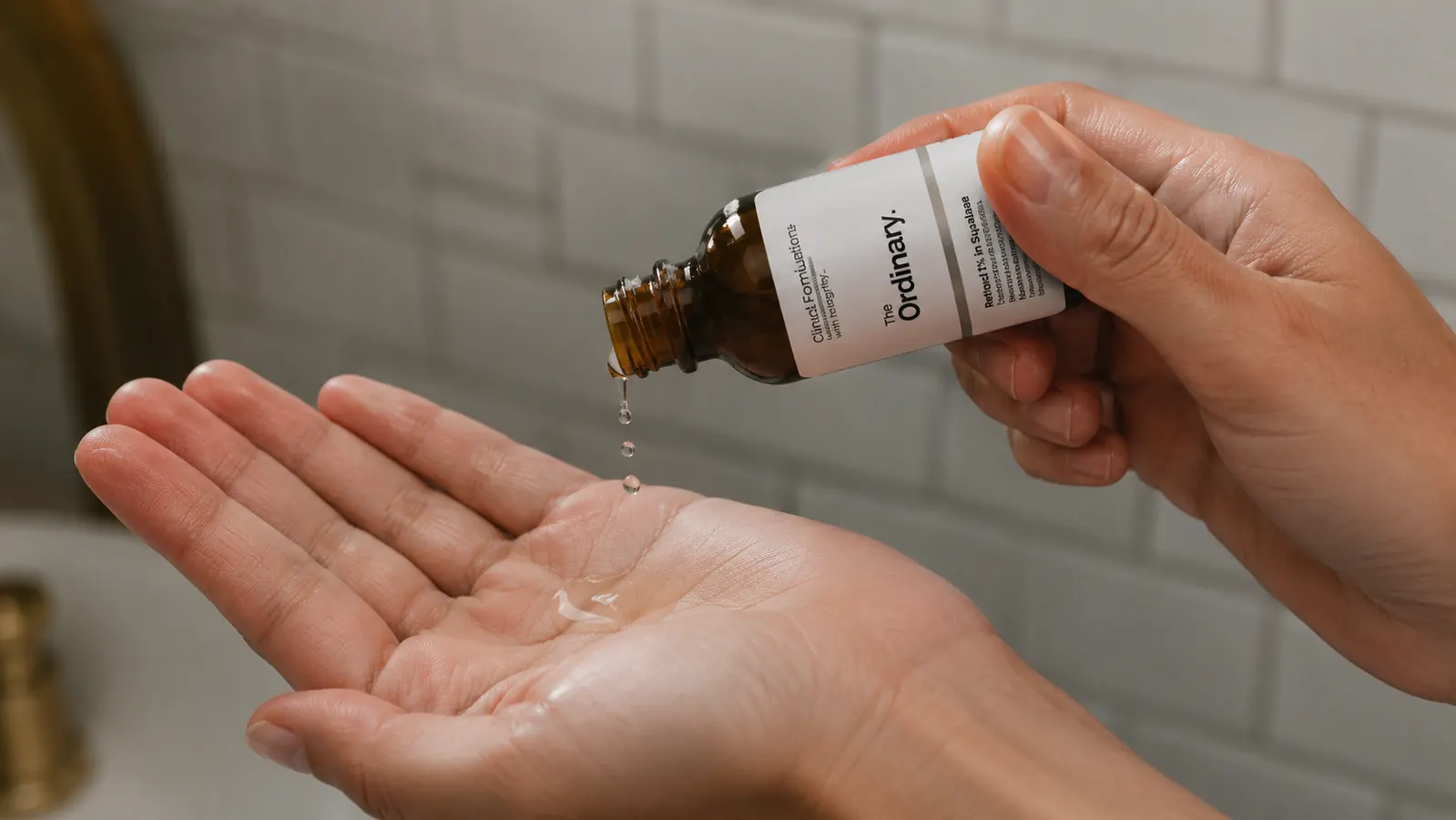
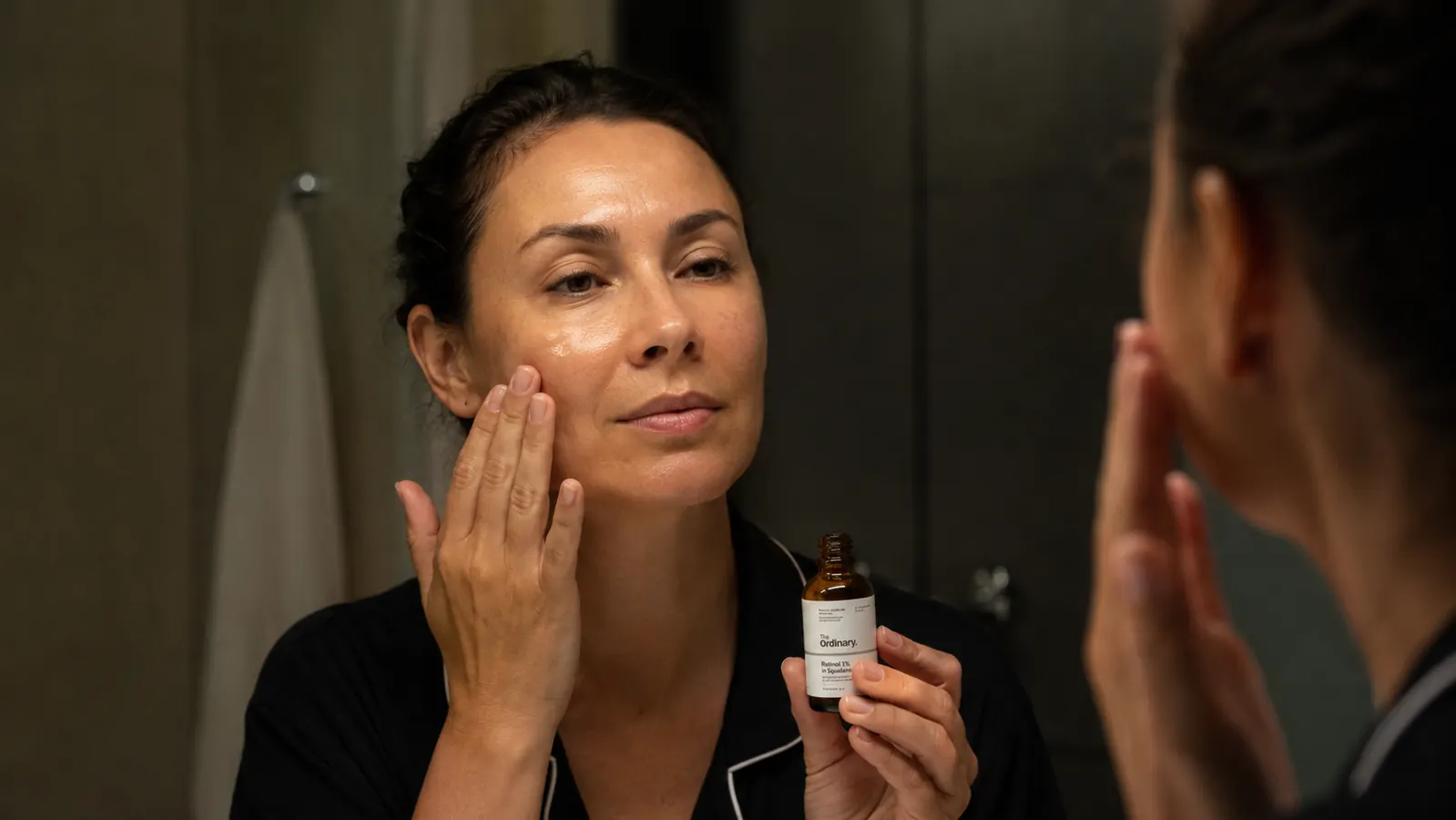
I apply this serum at night, on dry skin, after cleansing but before moisturizer. Two drops warmed between my fingers, pressed gently across the full face except the undereye area. Jordan uses the same application method but with one critical difference: the moisturizer comes after a full 30-minute gap, because on his skin the serum needs time to fully absorb before layering or it balls up slightly. On my dry skin, the squalane absorbs quickly enough that I can follow with moisturizer in about a minute without pilling.
We have both been using this for long enough to have seen real results and real frustrations. What I want to do in this review is actually describe what the experience looks like on each skin type, because the advice for dry skin and the advice for oily skin with retinol is genuinely different, and most reviews treat skin type as an afterthought.
What Dry Skin People Are Not Warned About
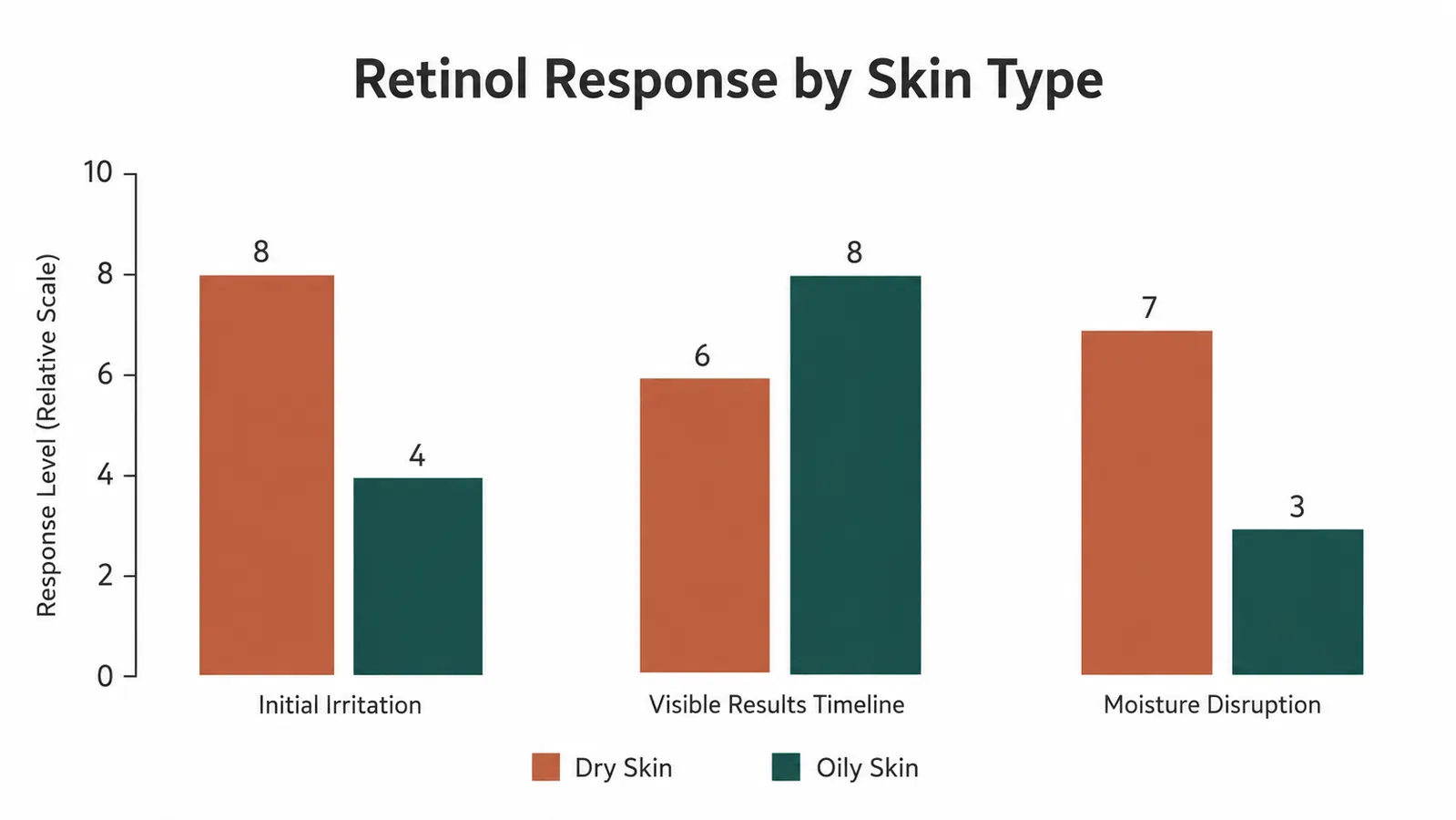
The squalane base does soften the blow, but it does not eliminate the moisture disruption that retinol causes in the first four to six weeks on dry skin. My skin runs dehydrated at the jawline under normal conditions. When I added the 1% retinol, that dehydration worsened noticeably in the second and third week. I was not using this on top of any other actives and I was applying a good ceramide-based moisturizer afterward, but the retinol was turning over cells faster than my barrier could keep pace.
The fix that worked for me was switching from applying to completely dry skin to applying when my skin was still very slightly damp, about 20 seconds after patting mostly dry. That damp-skin method slows absorption slightly, which reduces the intensity of the irritation without requiring you to reduce frequency. I also added a separate, fragrance-free facial oil as a final step on application nights. Nothing fancy. Just an extra layer of lipids over the top of the serum and moisturizer sandwich.
Here is what I wish someone had told me before I started: dry skin people should not judge this serum in the first three weeks. The period between week two and week four is genuinely uncomfortable for a dry skin type at 1% retinol. If you pull it from the rotation during that window, which is completely understandable, you are giving up before the turnover rate stabilizes. The uncomfortable period does end. My skin is now noticeably smoother and my jawline texture, which had been rough and somewhat bumpy for years, looks better than it did before any of this started.
What Oily Skin People Experience That Is Actually Different
Jordan's skin handled the adjustment phase far more easily than mine did. He had some flaking across the forehead in week two, which he managed with a simple hydrating toner the morning after application nights, and that was the extent of his initial discomfort. The squalane did not make his skin greasy or cause breakouts, which was his main concern going in. Squalane is technically a skin-identical lipid and it is non-comedogenic, so it sits differently on the skin than a traditional oil-based carrier would.
The honest tradeoff for oily skin is the timeline to visible results. Jordan's skin did not show the same dramatic texture improvements that mine eventually did, at least not on the same schedule, and the changes were more subtle in photos. What oily skin gets from retinol is different from what dry skin gets. The main visible benefit Jordan noticed was a reduction in the congestion around his nose and forehead, where he typically deals with clogged pores and small blackheads. The retinol accelerated cell turnover in a way that kept those pores clearing more consistently. His skin tone also evened out. But he did not experience the kind of softening effect that I saw on my cheeks.
The one surprise Jordan had was that this formula, at 1%, made his skin temporarily more sensitive to sun exposure. He already uses SPF daily because I have been on him about it for years, but he noticed some redness on days after application nights when he was outside for an extended period without reapplying sunscreen. That photosensitivity effect is standard with retinol and not specific to this formula, but it is worth noting for anyone who spends significant time outdoors and is not in a consistent SPF habit already.
Dry skin struggles with the moisture disruption. Oily skin sails through the adjustment but sees more subtle results. Same bottle. Very different experiences. Both worth it.
The Honest Product Tradeoffs Nobody Mentions
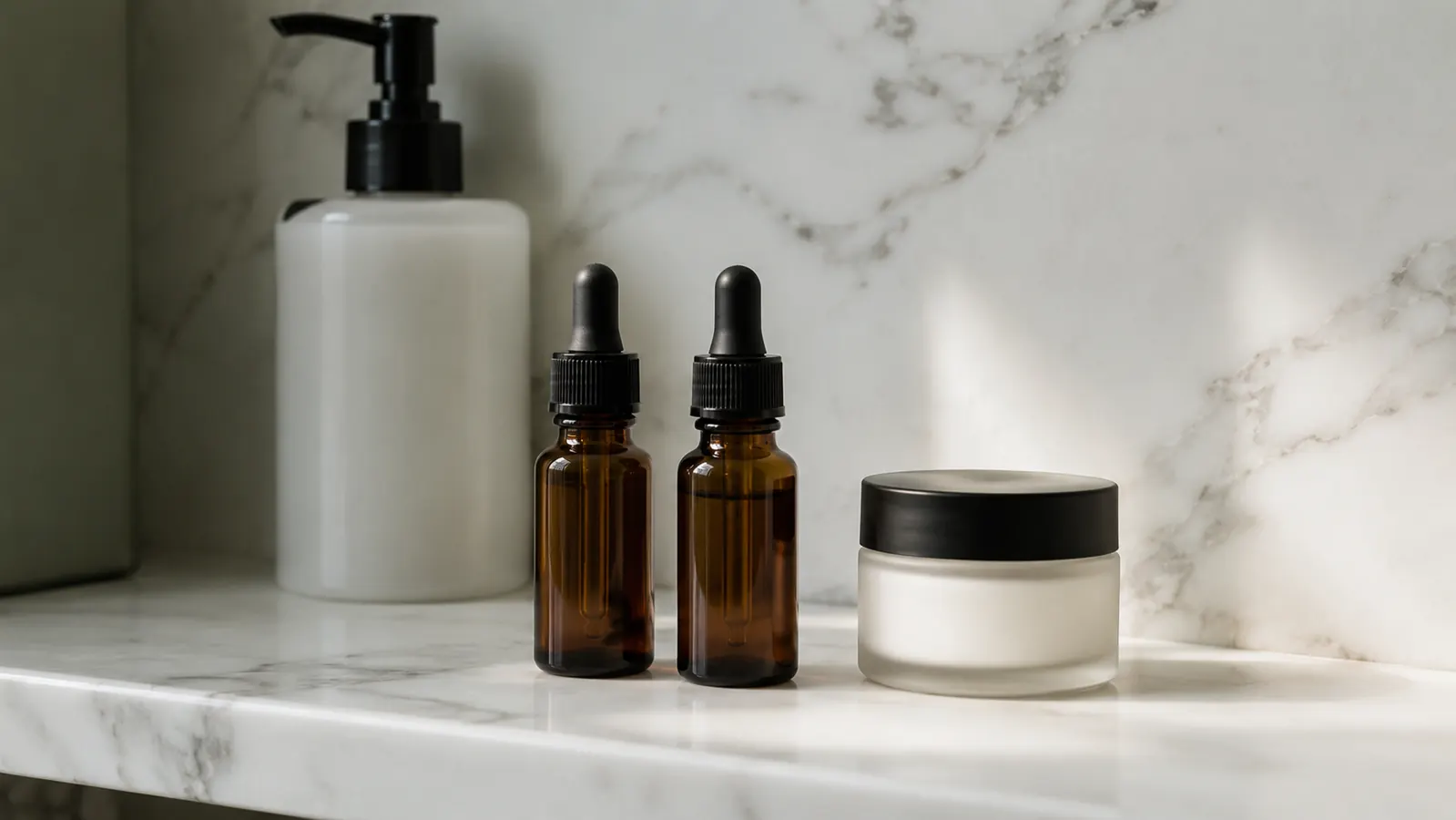
The bottle design is a legitimate complaint. The amber glass dropper bottle looks clean and minimal on a shelf, but the dropper mechanism does not have graduated markings and the pipette tip is short enough that you are essentially guessing on two drops versus three. That matters at 1% retinol because the difference between a conservative application and an overly generous one affects how your skin responds in the first month. I eventually started dispensing into my palm first to assess volume before applying. It sounds like a minor thing but if you are managing dry or sensitive skin it is the kind of imprecision that leads people to over-apply and get irritated unnecessarily.
The serum is not formulated for stacking with other actives. It does not contain any humectants, peptides, niacinamide, or exfoliating acids. That minimalism is intentional and it is actually what makes it work well for a range of skin types, but it does mean your routine needs to supply everything else. If you are used to a serum that multi-tasks, you will need to add those things separately. For us, that looks like a separate hyaluronic acid serum on off-nights and a niacinamide product in the morning routine.
There is also a texture adjustment expectation mismatch in the reviews. Some people describe this serum as silky or rich-feeling. It is not. The squalane base is a very thin, almost weightless oil. On dry skin, two drops cover the face without any sense of cushion or moisturization. It is not uncomfortable but if you are expecting the serum to feel nourishing on application, you will probably apply more than you need looking for that sensation. The moisturizer step is not optional when you use this.
Where the Formula Actually Delivers
The retinol itself works. That is the core thing to say about this product. At 1% pure retinol in a stable squalane base, it delivers a real concentration of the active at a price that removes the rationing instinct. The main reason retinol routines fail is inconsistency, and the main driver of inconsistency is either irritation from wrong application or the hesitation that comes from spending a lot of money on a bottle and using it sparingly to make it last. Neither of those excuses applies here.
The squalane base does earn its place. Compared to alcohol-based retinol serums, which can feel stripping and cause immediate tightness, this formula sits gently on skin. Jordan specifically noted that every other retinol he had tried before this one felt uncomfortable immediately after application. This one did not. For anyone who has tried a retinol and abandoned it because the formula felt harsh rather than because of purging, the squalane base here is worth trying.
Both of us would buy this again. That is the simplest summary I can give. I keep it in my routine because my skin texture is better than it was before I started and the formula cooperates with my dry skin in a way that retinol cream-based alternatives did not. Jordan keeps it because his congestion is lower and his skin tone is more even. We use the same bottle, same protocol, same results timeline expectations, and we are both keeping it on the shelf.
What I Liked
- 1% retinol concentration delivers real anti-aging results without the premium price
- Squalane base is non-comedogenic, absorbs without greasiness, suits oily skin well
- No fragrance, no essential oils, no alcohol, minimal formula reduces compounding irritants
- Thin texture absorbs quickly and does not ball up under moisturizer when layered correctly
- Works for both dry and oily skin types, though the experience and timeline differ
- Accessible price point removes the rationing instinct that undermines retinol consistency
Where It Falls Short
- Bottle dropper lacks graduated markings, making precise dosing harder than it should be
- Dry skin experiences real moisture disruption in weeks two through four
- No humectants or barrier-supporting ingredients in the formula, requires a solid moisturizer layer
- Oily skin sees more subtle visible results than dry skin at the same timeline
- Increases photosensitivity, makes consistent daily SPF non-negotiable
- 1% is not a beginner concentration, lower strengths exist in the same line for first-time users
The Routines We Actually Use Around It
On nights when I apply this serum, my routine is cleanser, slightly damp skin, two drops of retinol pressed in, 60 seconds to absorb, ceramide moisturizer, then a thin facial oil as a final seal. On off-nights I use a hyaluronic acid serum and skip the retinol entirely. No exfoliating acids on the same nights as retinol, no active vitamin C at night during retinization. If any of those boundaries feel confusing, the how-to guide on starting retinol without irritation covers the layering logic in more detail.
Jordan's application nights are similar but he skips the facial oil seal since his skin does not need it and he finds it slightly heavy. He added a hydrating toner in the mornings after application nights, which addressed most of the early-phase dehydration he noticed. The morning after routine matters for both skin types, not just the night-of application.

Who This Is For
This serum is for anyone who has been using a basic skincare routine for at least six months and wants to add a genuine anti-aging active. It works for both genders and both skin types, though the experience on oily skin is gentler and the experience on dry skin requires more supporting steps. If you have a partner who has been curious about retinol, there is no reason you cannot share one bottle. The protocol can be adjusted independently per skin type without changing the product. We buy one bottle and both use it, which is one of the practical reasons it stays on the shelf. Also see the listicle on why a retinol serum belongs in any shared nighttime routine for a longer look at the specific benefits by concern.
Who Should Skip It
Skip the 1% if you have never used a retinoid before. The Ordinary makes 0.2% and 0.5% versions in the same squalane base, which are appropriate starting points for first-timers. Use a lower strength for at least three months, confirm your skin handles it, then step up. Also skip this if you are pregnant or nursing, retinoids are contraindicated regardless of strength or carrier. If you have an actively compromised barrier from over-exfoliation or a skin condition flare, wait until your skin is stable before introducing any retinol. And if you are not willing to wear SPF every morning without fail, hold off on this one until you are. Photosensitivity from retinol is not a minor footnote.
Both skin types, one bottle. If you are ready to commit to a real retinol, this is the one.
The Ordinary Retinol 1% in Squalane has 18,000-plus reviews on Amazon with a 4.5-star average. Whether you run dry or oily, this formula covers the basics at a price that makes it easy to stay consistent. Check today's price below.
Amazon Check Today's Price on Amazon →